
Tanzania in East Africa is one of the most extraordinary countries on the planet. It has Africa’s highest mountain, the world’s most famous wildlife migration, a UNESCO-listed volcanic crater teeming with animals, and tropical islands with centuries of Swahili history. Few countries pack this much variety into a single destination, and fewer still do it with the kind of natural scale Tanzania brings to every corner of the map.
Quick Answer: Tanzania in East Africa
- Tanzania is a country in East Africa, bordered by Kenya and Uganda to the north, the Indian Ocean to the east, and eight other countries including Mozambique and Zambia to the south and west.
- It is the largest country in East Africa, covering approximately 947,000 square kilometres, and has a population of over 70 million people.
- Nearly 38% of Tanzania’s land is protected as national parks, game reserves, and conservation areas, more than any other African country.
- The country is home to Mount Kilimanjaro (Africa’s highest peak at 5,895 metres), the Serengeti National Park, Ngorongoro Crater, and the Zanzibar archipelago.
- Tanzania is consistently one of Africa’s most politically stable and peaceful countries, making it one of the safest safari destinations on the continent.
Where Is Tanzania in East Africa?
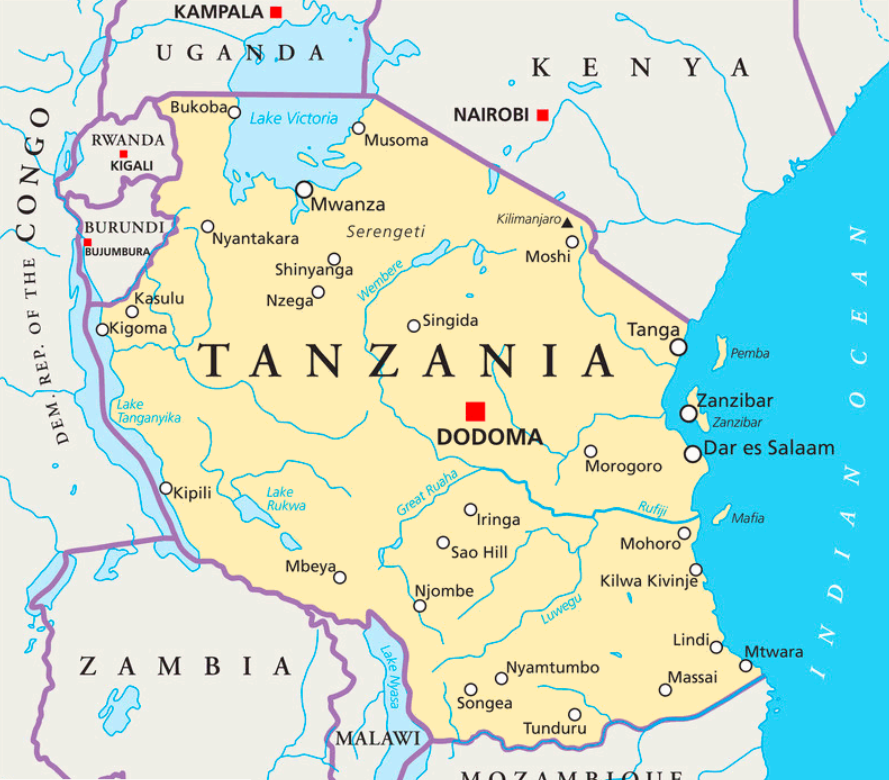
Tanzania is a country in East Africa, sits just south of the equator on the eastern coast of Africa. To the north it shares borders with Kenya and Uganda. To the northwest lie Rwanda and Burundi. To the west sits the Democratic Republic of Congo. Zambia and Malawi border it to the southwest, and Mozambique lies to the south. The Indian Ocean forms its entire eastern coastline, stretching from the Kenyan border in the north down to Mozambique in the south.
This position makes Tanzania a geographic crossroads. The mainland, historically called Tanganyika, connects the East African safari circuit to the southern African wildlife destinations. The Zanzibar archipelago, sitting just 35 kilometres off the coast, adds a tropical island dimension that most landlocked safari countries cannot offer.
Tanzania is the largest country in East Africa by land area, covering 947,300 square kilometers. For context, that is larger than France and Germany combined.
A Short History of Tanzania
Tanzania as a country did not exist until 1964. Tanganyika gained independence from British colonial rule in December 1961 under Julius Nyerere, who became the country’s first president and remains one of the most respected leaders in African history. Zanzibar freed itself from British and Sultanate rule in January 1963, then underwent a revolution in January 1964 that overthrew the Arab-dominated government.
On April 26, 1964, Tanganyika and Zanzibar united to form the United Republic of Tanzania. The name combines the two: Tan from Tanganyika and Zan from Zanzibar. The date is still celebrated annually as Union Day.
Tanzania has remained one of Africa’s most politically stable countries since independence, which is one reason why its tourism infrastructure has developed so consistently and why it continues to attract visitors who want to travel safely.
Tanzania’s Two Capital Cities
Tanzania operates with two cities serving different functions, which surprises many visitors.
- Dodoma is the official capital city of Tanzania, located in the geographic center of the country. Parliament sits here and all government ministries are officially based here, a deliberate decision made in 1974 to shift power away from the coast and into the heart of the country.
- Dar es Salaam is the former capital of Tanzania and remains the country’s largest city, main port, commercial center, and economic hub. Most international flights arrive here. The city has a population of around 7 million, a modern skyline along the Indian Ocean coast, and a cultural energy shaped by its Swahili, Arab, Indian, and African communities.
Tanzania Wildlife and National Parks
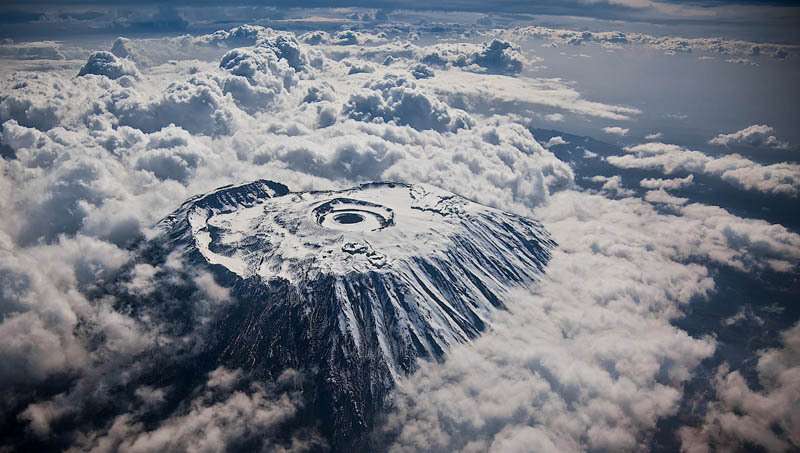
Mount Kilimanjaro rises to 5,895 metres in northern Tanzania near the Kenyan border. It is Africa’s highest peak and the world’s highest free-standing mountain. The summit, Uhuru Peak, sits above the clouds and is covered in glaciers, though these have been retreating significantly. Around 50,000 people attempt the climb each year. It is visible from Amboseli National Park across the border in Kenya on clear mornings.
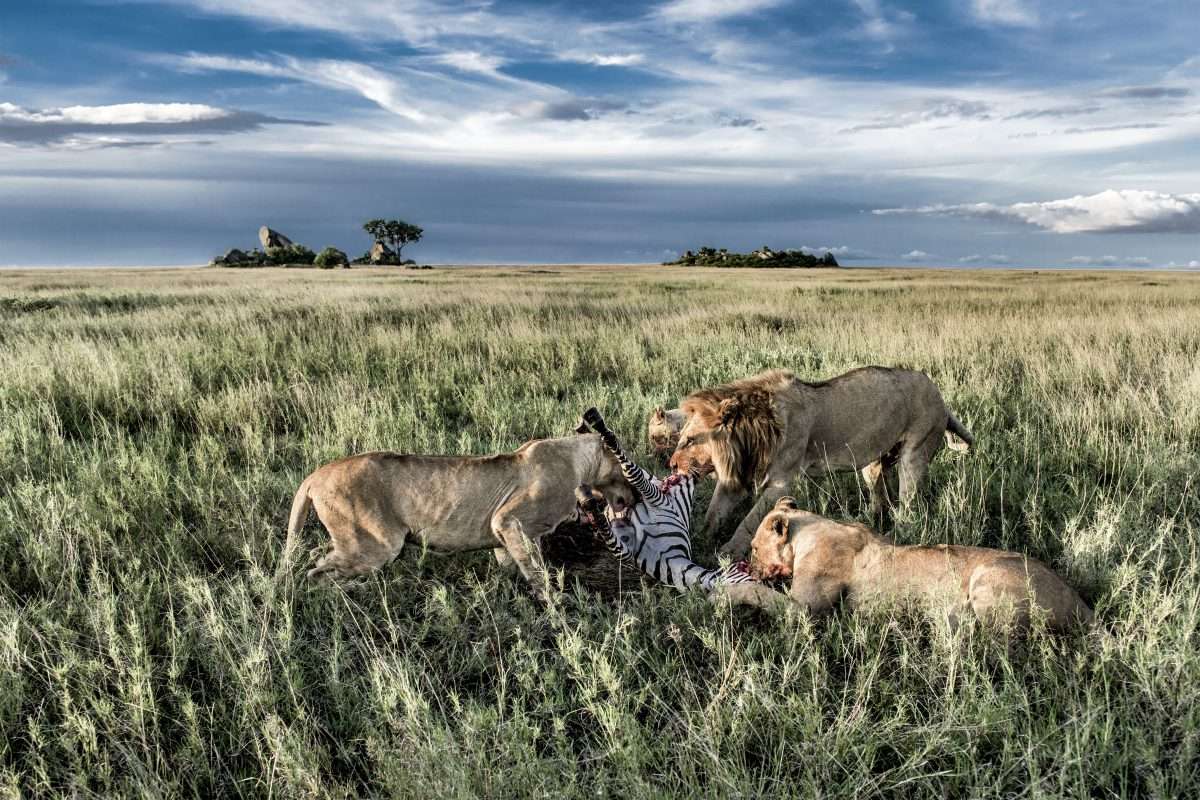
Serengeti National Park is the priority for first-time Tanzania visitors. The park covers 14,763 km² of open savannah and is home to over 2 million animals. Game drives in the Serengeti produce sightings of lions, cheetahs, leopards, elephants, giraffes, and zebras with a consistency that very few places on earth match. The park’s sheer scale means you can drive for hours without seeing another vehicle if you choose the right routes.
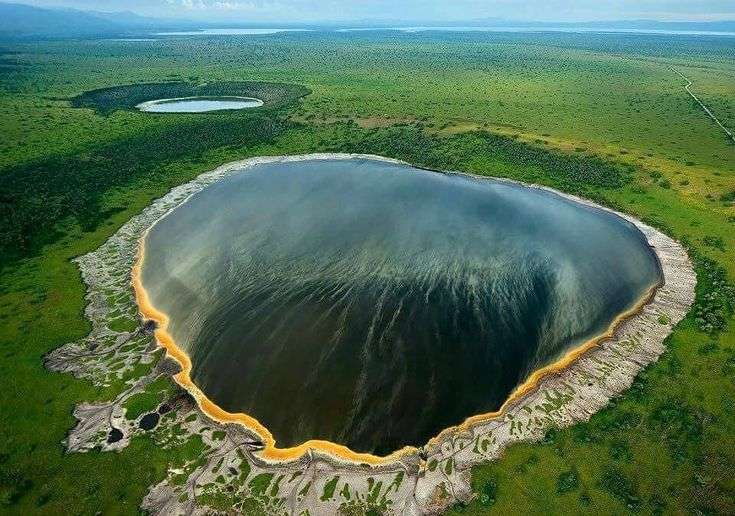
Ngorongoro Crater is the world’s largest intact volcanic caldera, measuring 19 kilometres across and 600 metres deep. Around 25,000 large animals live permanently inside the crater, including one of Africa’s last stable populations of black rhinos
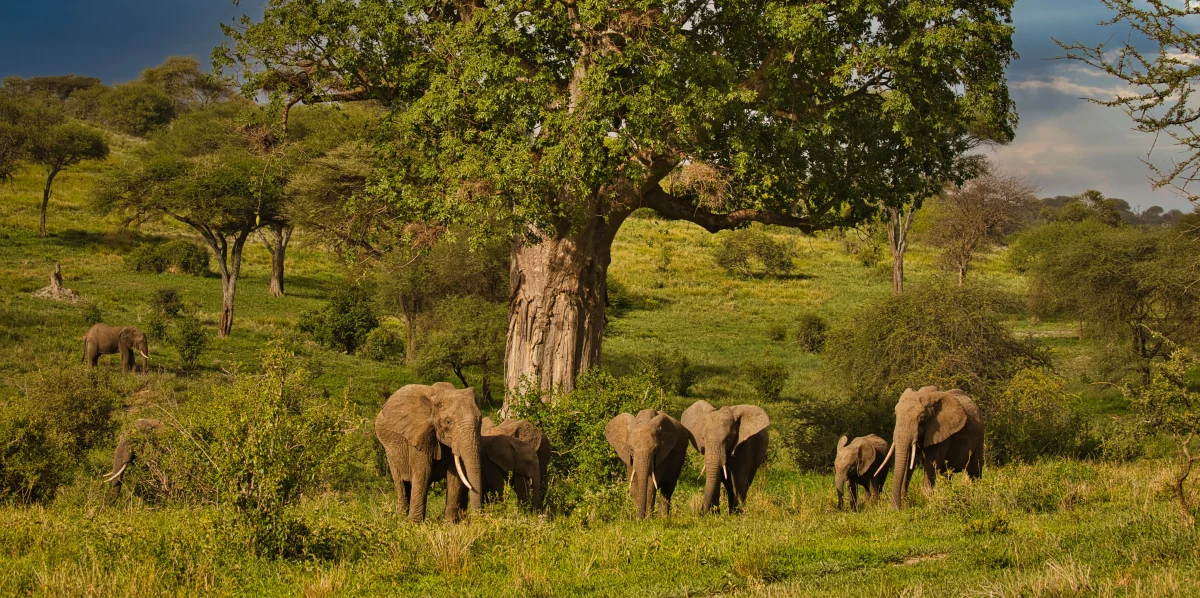
Tarangire National Park is the underrated choice on the northern circuit. Famous for its ancient baobab trees that dot the landscape and its enormous elephant herds that gather along the Tarangire River in the dry season, it offers a quieter, more intimate experience than the Serengeti without sacrificing quality.
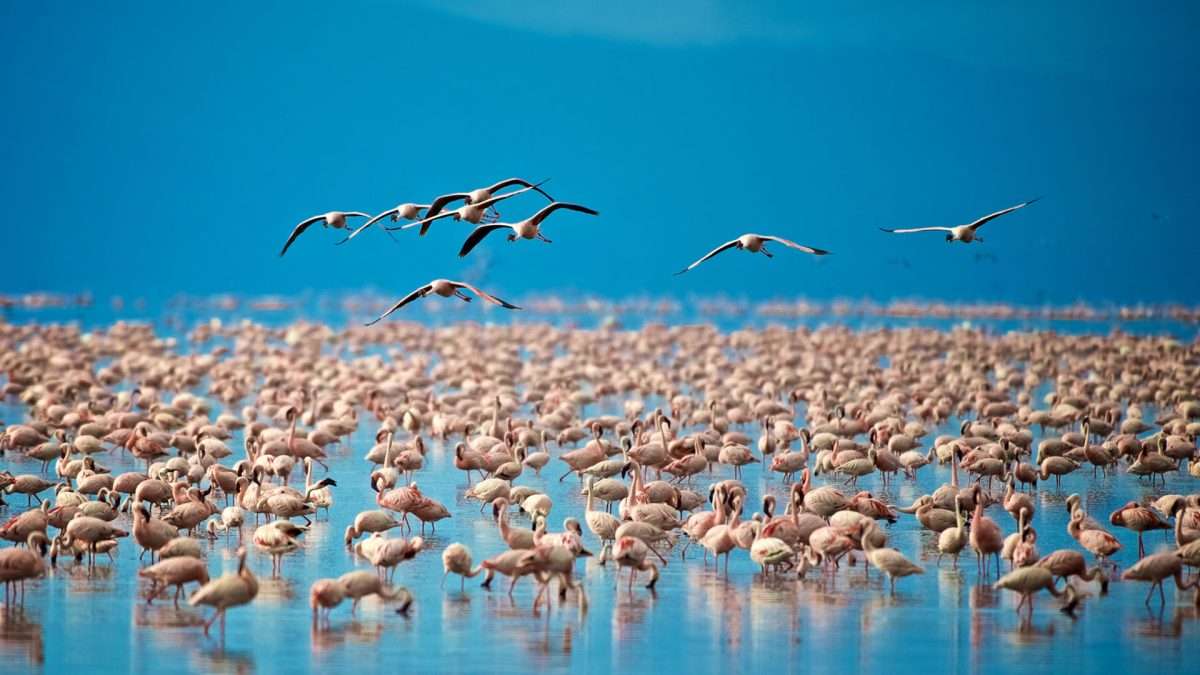
Lake Manyara National Park is compact (330 km²) but surprisingly productive. Tree-climbing lions rest in the branches of acacia and fig trees along the lakeshore. The lake itself holds flamingos and pelicans in significant numbers. The groundwater forest on the park’s western edge is a completely different ecosystem from the open plains above.
The Great Wildebeest Migration in Tanzania
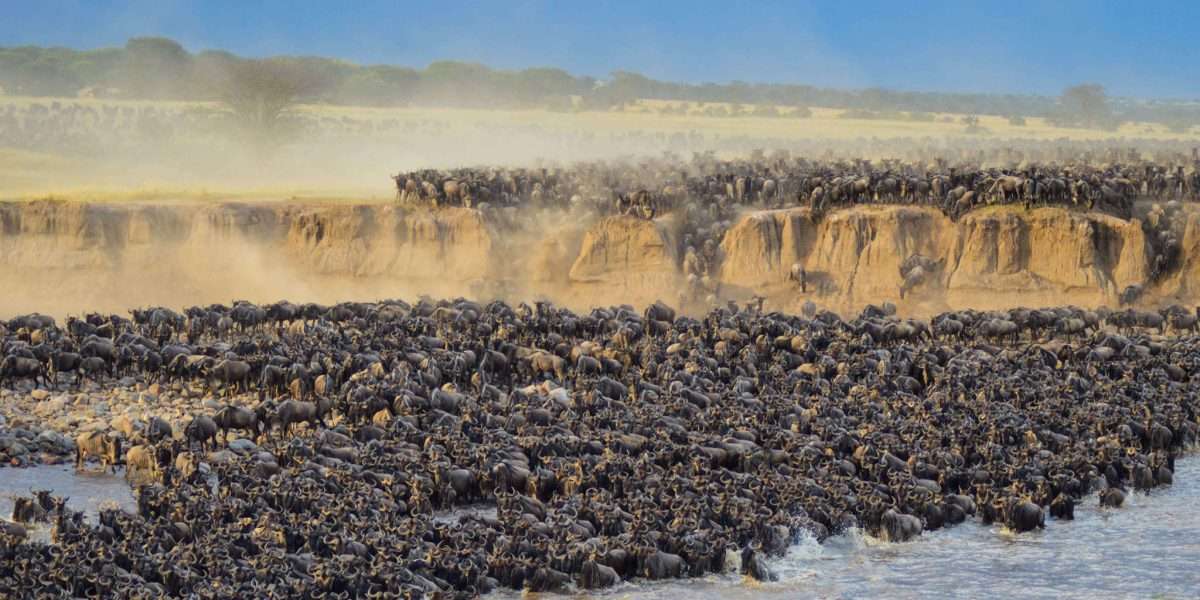
The Great Migration is the most famous wildlife event in the world. Around 1.5 million wildebeest, along with hundreds of thousands of zebra and gazelle, move in a circular route between the Serengeti and Kenya’s Masai Mara following rainfall and grass growth. The Mara River crossings, where herds plunge through crocodile-filled water, happen between July and October in the northern Serengeti. No single wildlife spectacle matches it in scale or drama.
The Big Five in Tanzania
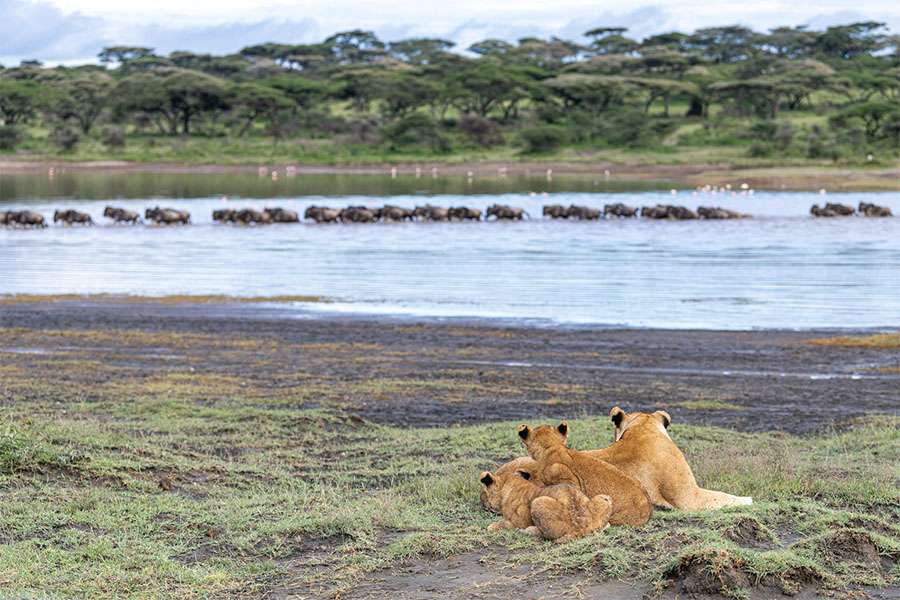
The Big Five (lion, leopard, elephant, buffalo, and rhino) are all present in Tanzania’s northern circuit. Ngorongoro Crater offers the best rhino sightings. The Serengeti delivers the most consistent lion and leopard encounters. Tarangire holds some of the largest elephant herds in East Africa.
Tanzania’s national animal is the Masai giraffe, also known as the Kilimanjaro giraffe, seen throughout the northern parks.
Zanzibar: Tanzania’s Island Chapter
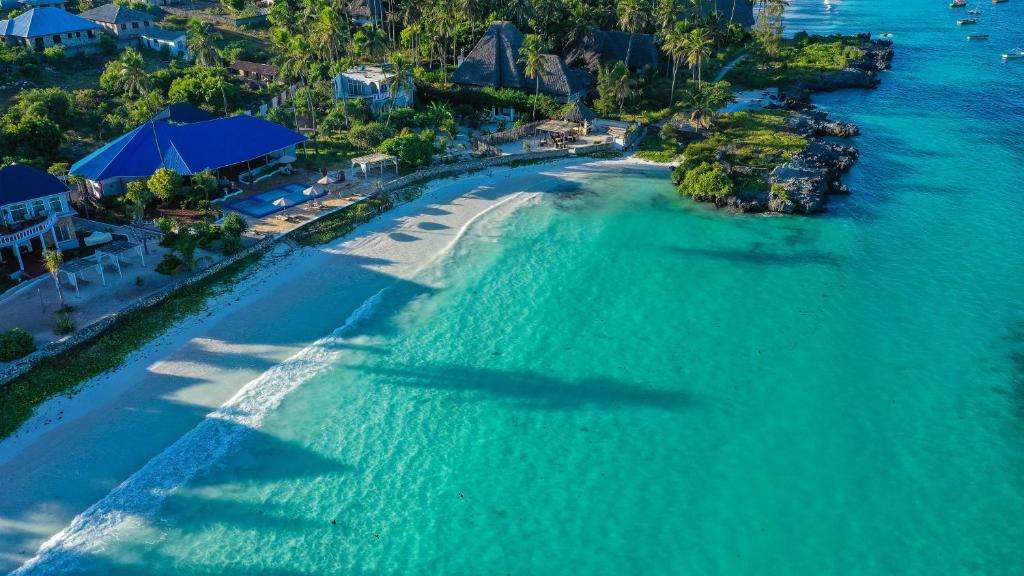
Zanzibar feels like a separate country from mainland Tanzania, and in many ways it operates like one. The Zanzibar archipelago has its own president, its own government, and a culture shaped more by centuries of Arab and Indian Ocean trade than by the African mainland.
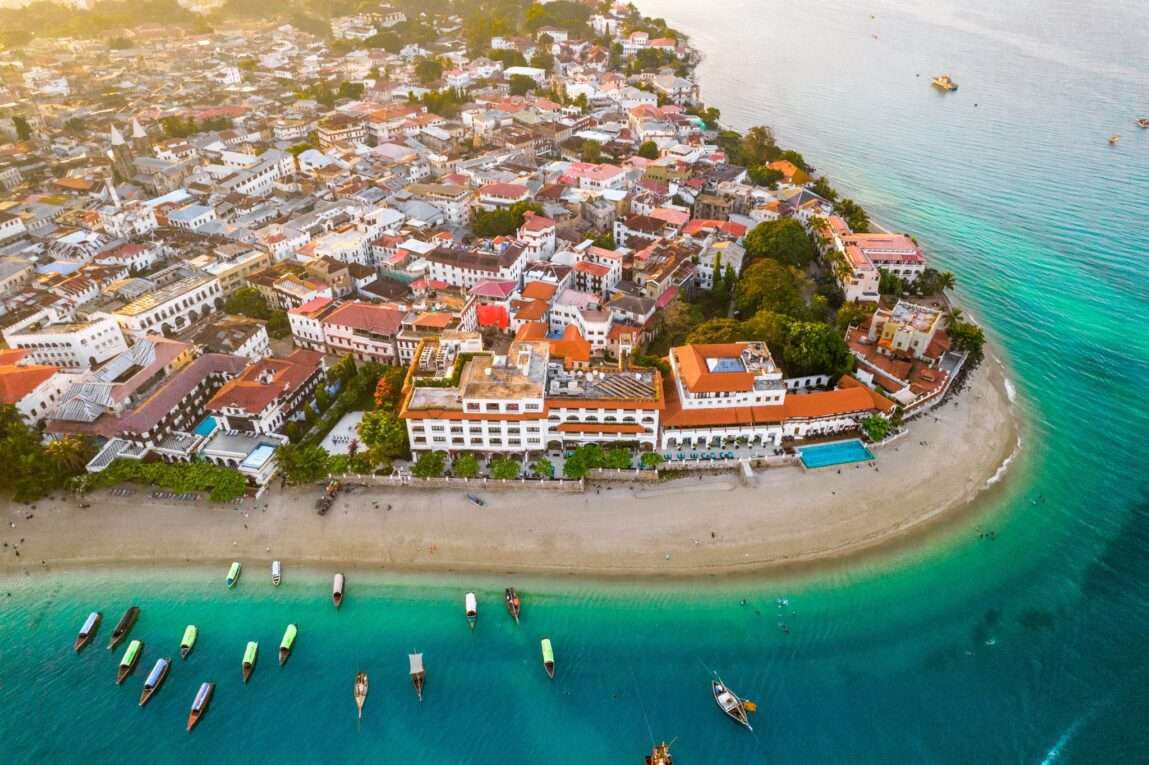
Stone Town is the historic heart of Zanzibar City on Unguja island. Its narrow coral-stone streets, carved wooden doorways, mosques, and markets earned it UNESCO World Heritage Site status. The town was the center of the East African spice and slave trade for centuries, and that history is present in every building and alleyway.
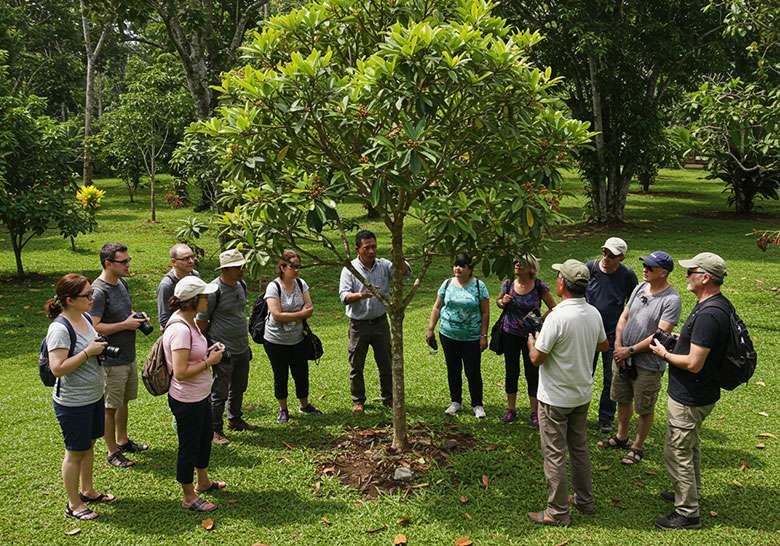
Spice tours around the island’s interior visit clove, nutmeg, vanilla, cinnamon, and black pepper plantations. Zanzibar was historically called the Spice Island and cloves remain a major export. A half-day spice tour with a local guide is one of the best ways to understand the island beyond its beaches.
The beaches are genuinely exceptional. Nungwi and Kendwa in the north offer the most consistent swimming conditions. Paje and Jambiani on the east coast are the kitesurfing destination of East Africa. Mnemba Island and Fanjove Island are private island retreats for those wanting total seclusion. A full guide to Tanzania’s beaches is available separately on the TourwithPipi blog.
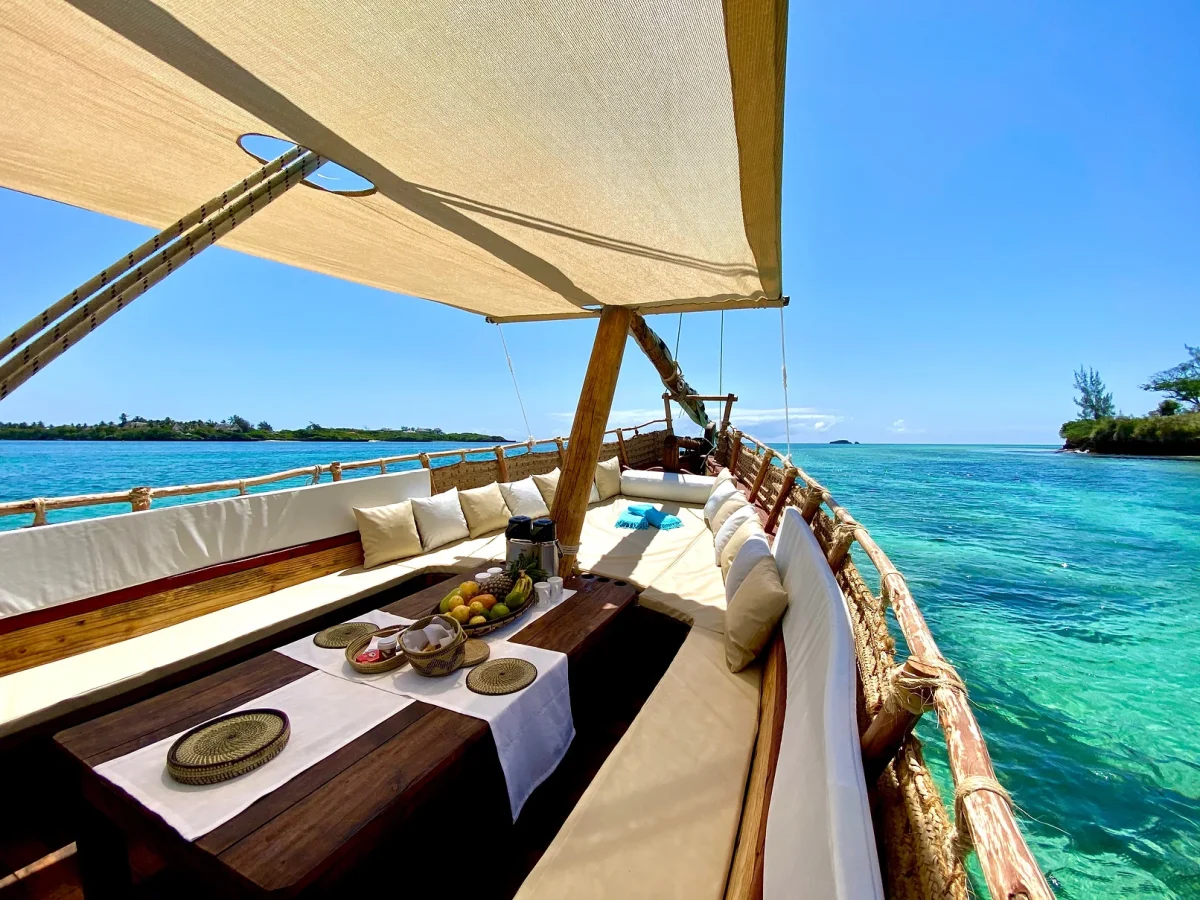
Dhow sunset cruises off the Zanzibar coast, combined with fresh grilled seafood on the beach afterward, are one of the most memorable ways to close out an East Africa trip.
Tanzania’s Culture and People
Tanzania is home to more than 120 ethnic groups, making it one of the most culturally diverse countries in Africa. Despite this, the country has remained notably cohesive and peaceful, in part because of the unifying role of Swahili as a shared language.
Swahili (Kiswahili) is the official language of Tanzania and the language of daily life across the country. It is one of the most widely spoken languages in Africa. English is also an official language and is used in education, government, and tourism. Learning a few Swahili words before your trip makes an immediate difference in how people respond to you.
A few useful phrases: Jambo (Hello), Asante (Thank you), Karibu (Welcome), Hakuna matata (No problem), and Pole pole (Slowly, slowly), a phrase you will hear constantly on Kilimanjaro.
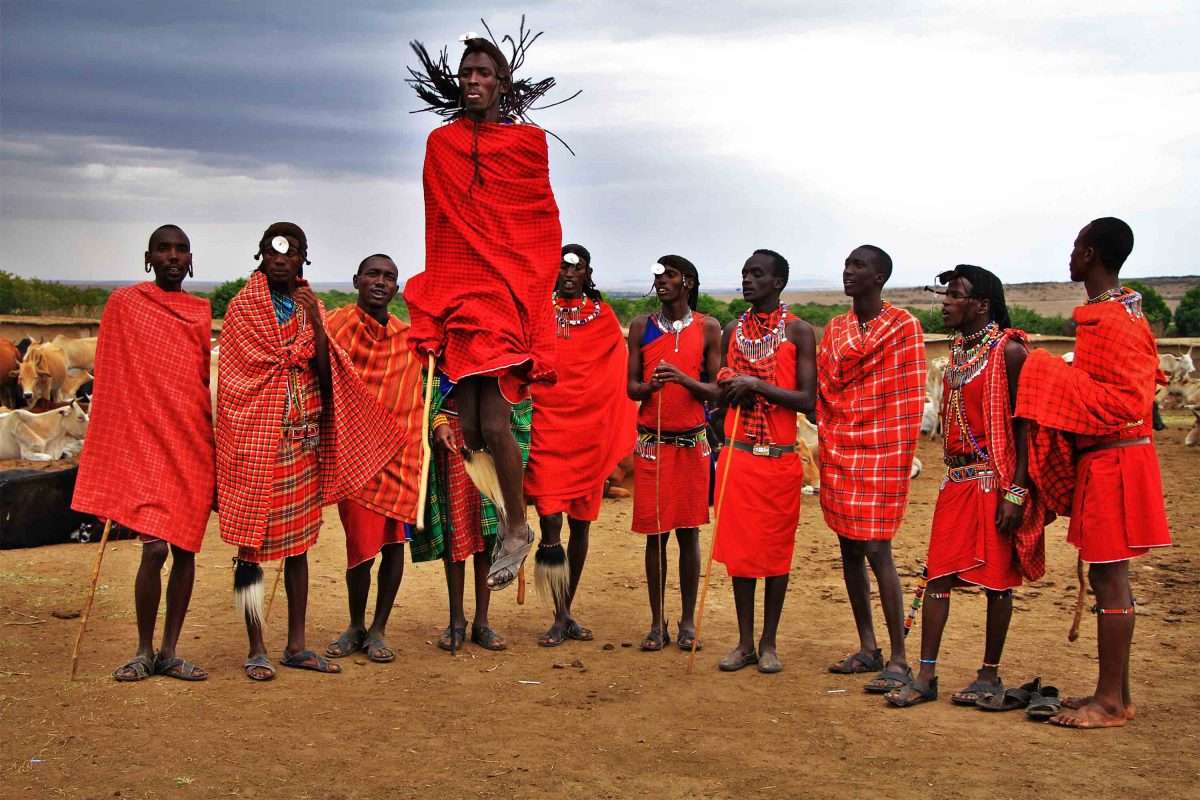
The Maasai are Tanzania’s most recognized ethnic group internationally. Semi-nomadic pastoralists who inhabit the northern regions near the Serengeti and Ngorongoro, they are known for their distinctive red shukas (cloth wraps), elaborate beadwork, and warrior traditions. Maasai communities in Tanzania offer genuine cultural visits where you can see traditional dances, enter a boma (homestead), and learn about their relationship with the land and wildlife.
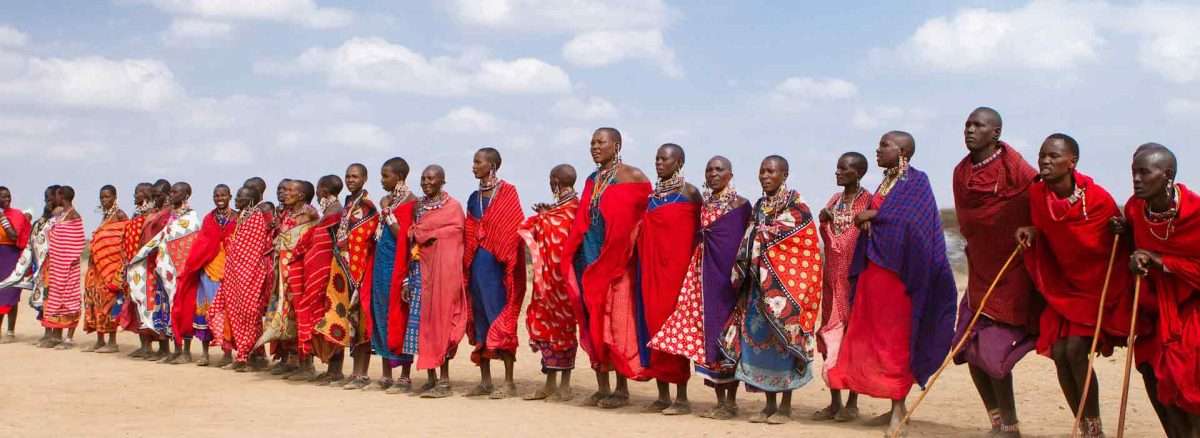
The Chagga people live on the slopes of Mount Kilimanjaro and are known as skilled farmers and traders. Many Kilimanjaro guides and porters come from Chaga communities who have lived on the mountain for generations.
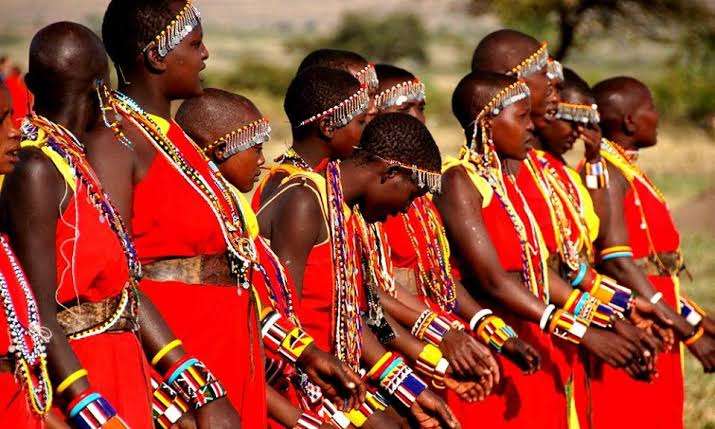
The Sukuma in the Lake Victoria region and the Hadzabe hunter-gatherers near Lake Eyasi are two other groups whose cultures offer remarkable insights into Tanzania’s human diversity for travelers who venture beyond the standard northern circuit.
Islam and Christianity are the two main religions. On the mainland, the population is roughly split. In Zanzibar, around 99% of the population is Muslim, which shapes the pace of life, the food, the architecture, and the rhythms of the island in ways that make it feel genuinely different from the mainland.
Climate and Best Time to Visit Tanzania
Tanzania’s climate varies by altitude and region, but the travel calendar follows the rain.
| Season | Months | What to Expect |
|---|---|---|
| Long Dry Season | June to October | Best safari conditions, Great Migration in north |
| Short Dry Season | January to February | Good game viewing, fewer crowds, lower rates |
| Long Rains | March to May | Green landscapes, fewer tourists, some roads difficult |
| Short Rains | November to December | Brief showers, still good conditions |
The dry season from June to October is the best overall period for safari. Grass is short, wildlife concentrates around water, and the Great Migration river crossings are happening in the northern Serengeti. January and February offer excellent game viewing with significantly fewer visitors and more competitive lodge rates.
For Kilimanjaro, the best climbing months are January to March and June to October when weather conditions on the mountain are most stable.
Tanzania Visa and Entry Requirements
Most nationalities including US, UK, Canadian, and Australian passport holders need a visa to enter Tanzania. As of 2026, Tanzania has moved to an electronic visa (e-Visa) system. Apply at the official Tanzania Immigration Services portal before departure.
Single-entry e-Visas cost USD 50 for most nationalities. Processing takes three to five business days. Apply at least two weeks before travel. You need a passport with at least six months validity beyond your travel dates.
US citizens should also check the current US State Department travel advisory for Tanzania before departure, as advisories can change.
Currency and Money in Tanzania
Tanzania’s official currency is the Tanzanian Shilling (TZS). US dollars are widely accepted in tourist areas, safari lodges, and for most activity payments. Park fees are paid in USD.
ATMs are available in Dar es Salaam, Arusha, and Zanzibar’s Stone Town but are unreliable in safari areas. Withdraw cash before leaving the main cities. Carry small-denomination USD bills (1, 5, 10, and 20) for safari guide tips, market purchases, and small payments.
Credit cards are accepted at most lodges and larger hotels but carry a transaction fee at many properties. M-Pesa mobile money is widely used by locals for everyday transactions.
Planning a Tanzania East Africa Safari?
We curate private luxury safaris in Tanzania across the full northern circuit: Tarangire for elephant herds, the Ngorongoro Crater for the Big Five and black rhino, and the Serengeti in every season. The Great Migration river crossings at Kogatende in the north from July to October. Thousands of wildebeest calves born daily on the Ndutu Plains in January and February. Year-round predators across the Central Serengeti. Add Zanzibar at the end for three nights on the Indian Ocean and the trip is complete.
Every Tanzania package includes a private 4×4 Land Cruiser, a certified English-speaking guide, full board meals, all park fees, airport transfers, and emergency medical evacuation cover.
10-Day Tanzania Great Migration Safari — From $5,479 Built around the Mara River crossings in the Northern Serengeti from July to October. Tarangire, Ngorongoro Crater, and Kogatende for front-row river crossing access.
10-Day Tanzania Calving Season Safari — From $4,839 January and February on the Ndutu Plains and Southern Serengeti when thousands of calves are born daily and predator action peaks. Also covers Tarangire and the Ngorongoro Crater.
7-Day Classic Tanzania Safari — From $3,109 The full northern circuit at a comfortable pace. Tarangire, Ngorongoro Crater, and Central Serengeti. The ideal first luxury Tanzania safari.
9-Day Tanzania Safari with Zanzibar — From $4,869 Tarangire, Ngorongoro Crater, and Central Serengeti, then a direct flight to Zanzibar for three nights at Neptune Pwani Beach Resort and Spa. The most popular package for honeymooners and couples.
Visit – Private luxury safaris in Tanzania or Talk to our team on WhatsApp to start planning.
Final Thoughts on Tanzania in East Africa
Tanzania does not need much selling. The Serengeti speaks for itself. So does Kilimanjaro, the Ngorongoro Crater, and the beaches of Zanzibar. What makes it worth saying plainly is this: very few countries in the world offer this range of experience in one trip, and fewer still do it with the kind of wildlife density and political stability that makes Tanzania so consistently rewarding to visit.
Whether you are coming for the Great Migration, a Kilimanjaro climb, a quiet week on the Zanzibar coast, or all three, Tanzania delivers. Plan it well, travel with people who know the country, and it will be one of the best trips you ever take.
Frequently Asked Questions About Tanzania in East Africa
1. Where exactly is Tanzania in East Africa?
Tanzania sits on the eastern coast of Africa just south of the equator. It borders Kenya and Uganda to the north, the Democratic Republic of Congo, Rwanda, and Burundi to the west, Zambia and Malawi to the southwest, Mozambique to the south, and the Indian Ocean to the east.
2. Is Tanzania in East Africa or Central Africa?
Tanzania is firmly in East Africa. Its western borders approach the Central African region but the country is classified geographically, politically, and culturally as East African.
3. What is Tanzania famous for?
Tanzania is famous for the Serengeti National Park, the Great Wildebeest Migration, Mount Kilimanjaro, Ngorongoro Crater, and the Zanzibar archipelago. It protects more land as wildlife areas than any other country in Africa.
4. When was Tanzania formed?
Tanzania was formed on April 26, 1964, when Tanganyika and Zanzibar united. Tanganyika had gained independence from Britain in 1961 and Zanzibar in 1963.
5. What is the capital of Tanzania?
Dodoma is the official capital. Dar es Salaam is the largest city, main port, and economic center. Most international flights arrive at Julius Nyerere International Airport in Dar es Salaam.
6. What language is spoken in Tanzania?
Swahili (Kiswahili) and English are both official languages. Swahili is the language of daily life across the country and is one of the most widely spoken languages in Africa.
7. What currency is used in Tanzania?
The Tanzanian Shilling (TZS) is the official currency. US dollars are widely accepted in tourist areas, safari lodges, and for park fees. Carry small-denomination USD bills for tips and small purchases.
8. Do I need a visa to visit Tanzania?
Yes. Most nationalities need a visa. Tanzania uses an e-Visa system for most visitors. Apply at the official Tanzania Immigration Services portal before departure. Single-entry e-Visas cost USD 50 and take three to five business days to process.
9. What is the best time to visit Tanzania for safari?
June to October is the best period for safari. Game viewing conditions are excellent across all parks and the Great Migration river crossings happen in the northern Serengeti between July and October. January and February offer good alternatives with fewer crowds.
10. How does Tanzania compare to Kenya for safari?
Both countries offer outstanding safaris sharing the same Great Migration ecosystem. Tanzania has the Serengeti, Ngorongoro Crater, and Zanzibar. Kenya has the Masai Mara, Ol Pejeta for rhinos, and beaches at Diani and Lamu. A combined 12 to 14 day itinerary covers both countries and is the best way to experience East Africa fully.


