
The animals of the Masai Mara represent one of the finest collections of wildlife anywhere on earth. Close to 90 mammal species and over 570 bird species live in the reserve and surrounding ecosystem. Lions, elephants, cheetahs, leopards, and cape buffalo are all regularly seen on a standard three-day game drive. During migration season, 1.5 million wildebeest pour across the plains from Tanzania and the scale of it stops you mid-sentence.
This is what Masai Mara National Reserve wildlife looks like up close.
Masai Mara Animals at a Glance
| Category | Numbers |
|---|---|
| Mammal species | Close to 90 |
| Bird species | Over 570 |
| Resident lions | 850 to 900 |
| Wildebeest (migration) | 1.5 million |
| Black rhinos (Mara Triangle) | 35 to 50 |
| Cheetahs | Regularly sighted |
| Leopards | Healthy population, increasing sightings |
The Big Five Animals in the Masai Mara
Lion
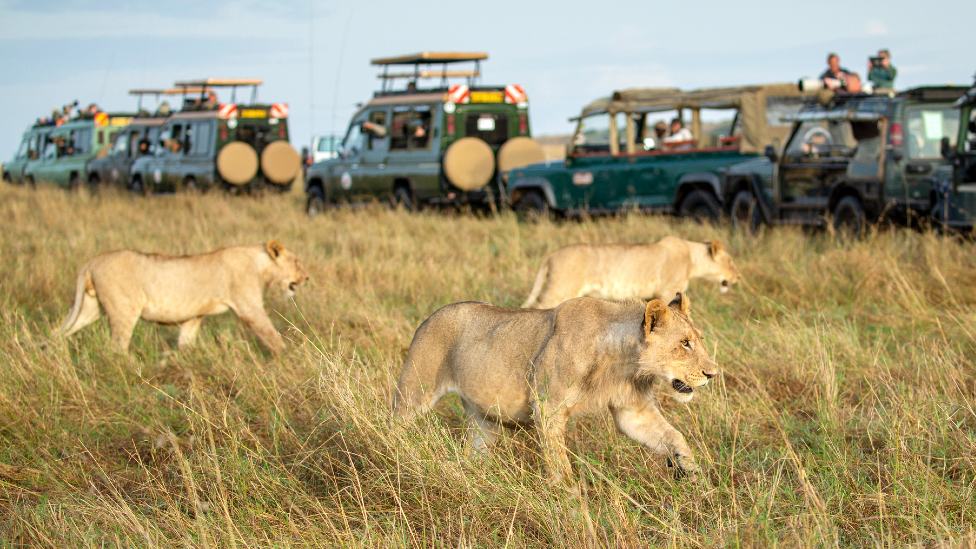
The Masai Mara is one of the best places in the world to see lions in the wild. An estimated 850 to 900 lions live across the national reserve and surrounding conservancies, one of the highest densities in Africa.
Lions here live in prides of 15 to 20 individuals. A typical pride has up to three males, several adult females, and their cubs. Males hold territories ranging from 30 to 400 square kilometers. Females do most of the hunting, targeting zebra and wildebeest during migration season and switching to warthog and buffalo at other times of year.
Lions sleep up to 20 hours a day. Your best chance of catching them active is at dawn and dusk. The Mara is also home to the Marsh Pride, made famous by BBC’s Big Cat Diary and Dynasties.
Elephant
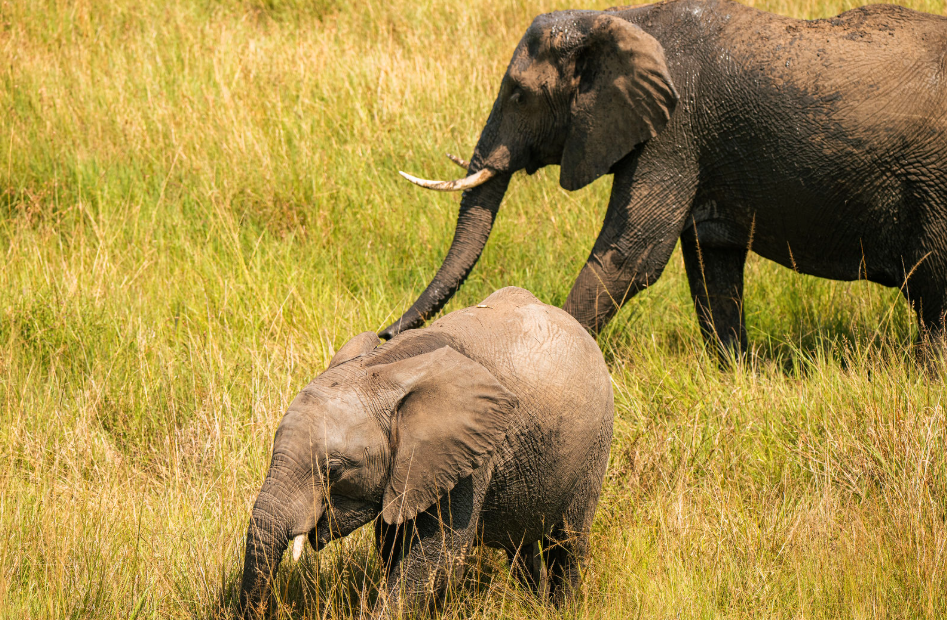
African elephants are one of the most common sightings in the Mara and the largest land animal on earth. A fully grown bull can stand nearly 3.5 metres high and weigh up to six tons. Despite ongoing threats from poaching, elephant numbers in the Mara have grown in recent years.
Elephants are matriarchal. The oldest female leads a multi-generational herd. Family units typically number around 10 individuals, though several families sometimes gather into a clan of up to 70 animals. They eat up to 300 pounds of grass, fruit, roots, and bark per day.
Leopard
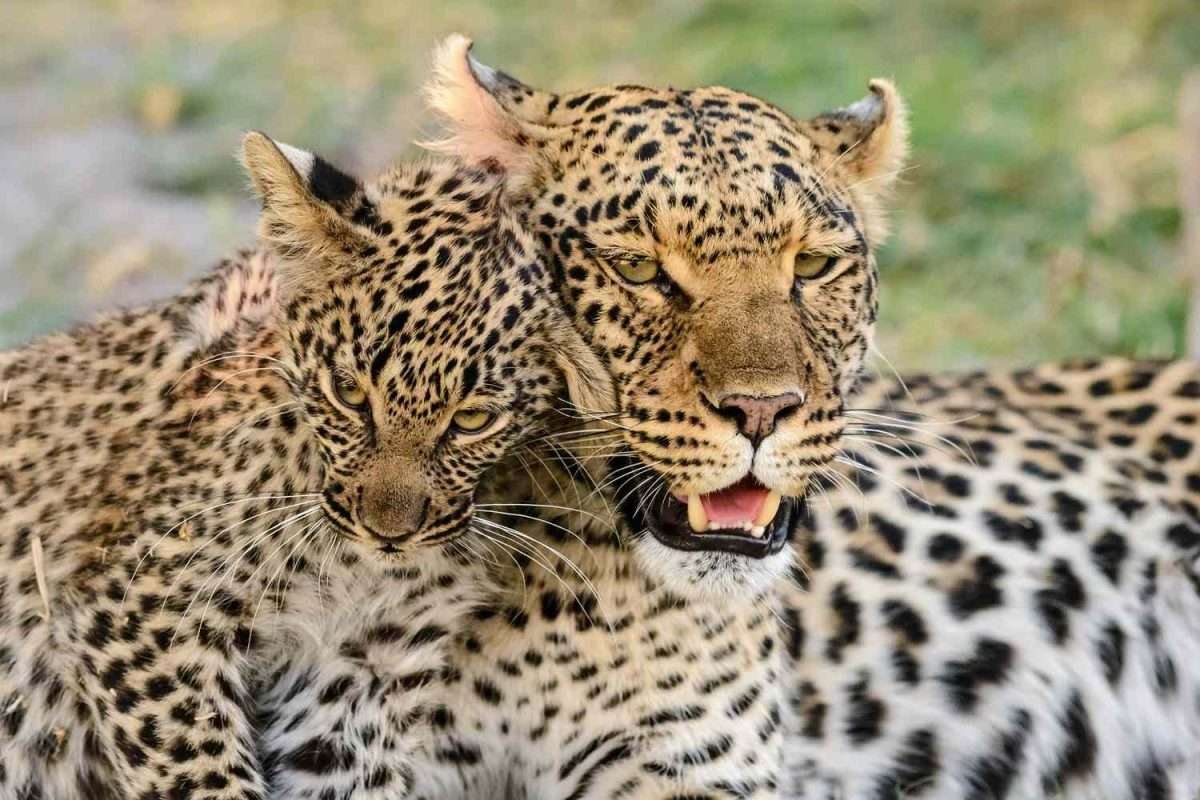
Leopards are present in healthy numbers in the Mara but remain one of the harder animals to find. They are solitary, nocturnal hunters that prefer riverine woodland and rocky outcrops. They drag kills high into trees to keep them from lions and hyenas.
Look for them in the fig and acacia trees along the Mara River on every river circuit drive. Sightings have increased noticeably in recent years. When one is found, guides share the location over radio and vehicles converge quickly.
Black Rhino
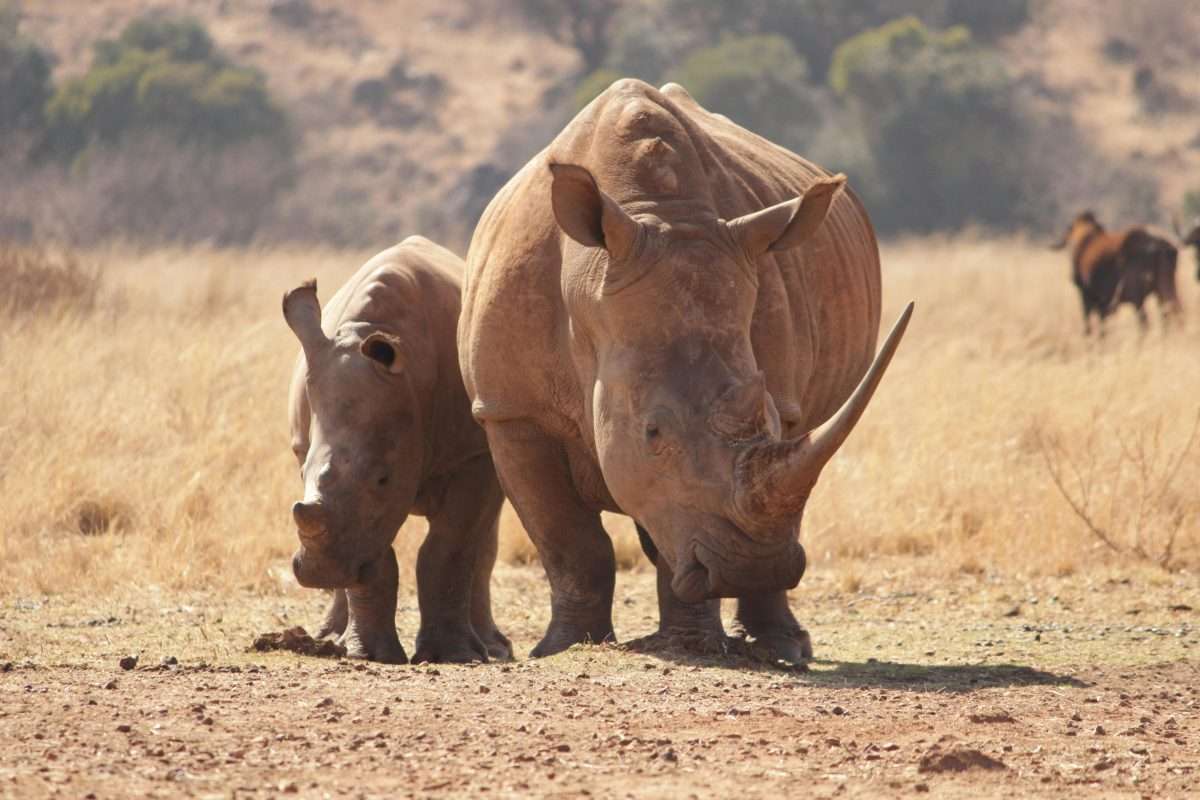
The Mara Triangle on the western side of the reserve holds 35 to 50 black rhinos, the only area of the Mara where rhino sightings are realistically possible. Black rhinos are smaller and more aggressive than white rhinos. They browse on shrubs using a hooked lip rather than grazing on grass. They have poor eyesight but an excellent sense of smell and hearing.
Rhino sightings in the Mara are not guaranteed. For reliable rhino encounters, TourwithPipi’s 8-day fly-in safari includes Ol Pejeta Conservancy in central Kenya, home to both white and black rhinos in a fenced, dedicated sanctuary.
Cape Buffalo
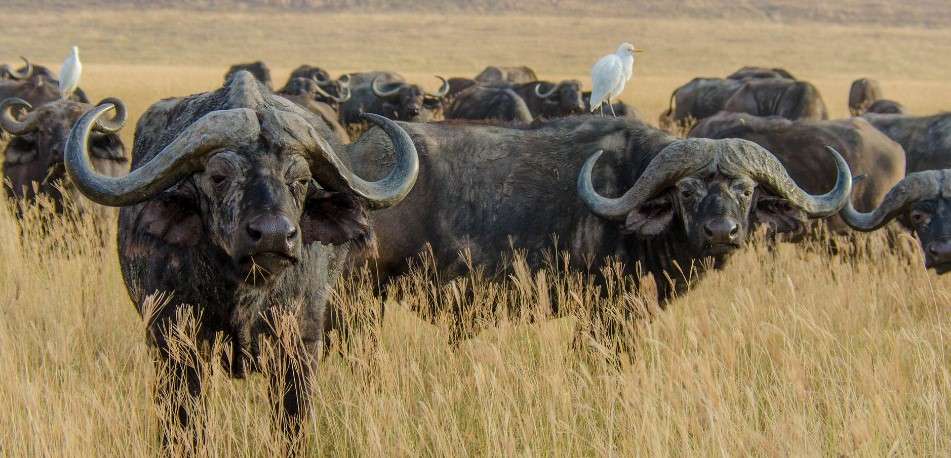
Cape buffalo are found throughout the Mara in herds of 100 or more, rarely straying far from water. They are considered one of the most dangerous animals in East Africa due to their unpredictable temperament. Lone bulls and females protecting calves are particularly aggressive. A full-grown buffalo weighs up to 800 kilograms.
The Big Nine Animals in Masai Mara
The Big Nine adds cheetah, giraffe, hippo, and zebra to the Big Five. The Masai Mara is one of the few places in Africa where all nine species can be spotted on a single two to three hour game drive.
Cheetah
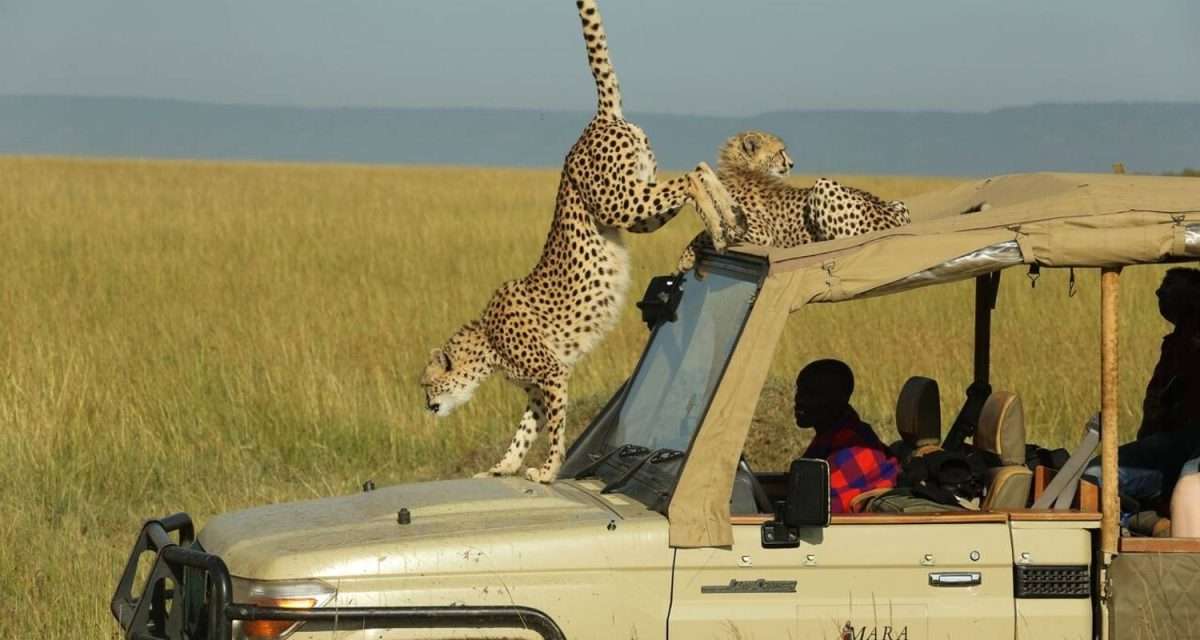
Cheetahs are one of the most iconic animals in the Masai Mara. They hunt in daylight on open plains, which makes them far more visible than leopards. They reach speeds of up to 110 km/h in short bursts during a hunt, the fastest land animal on earth.
Cheetahs stand around 80 cm at the shoulder and weigh 40 to 60 kg. They sometimes hunt in small coalitions of two to four males, usually brothers from the same litter. Open areas of the southern Mara plains are the most consistent cheetah territory.
Masai Giraffe
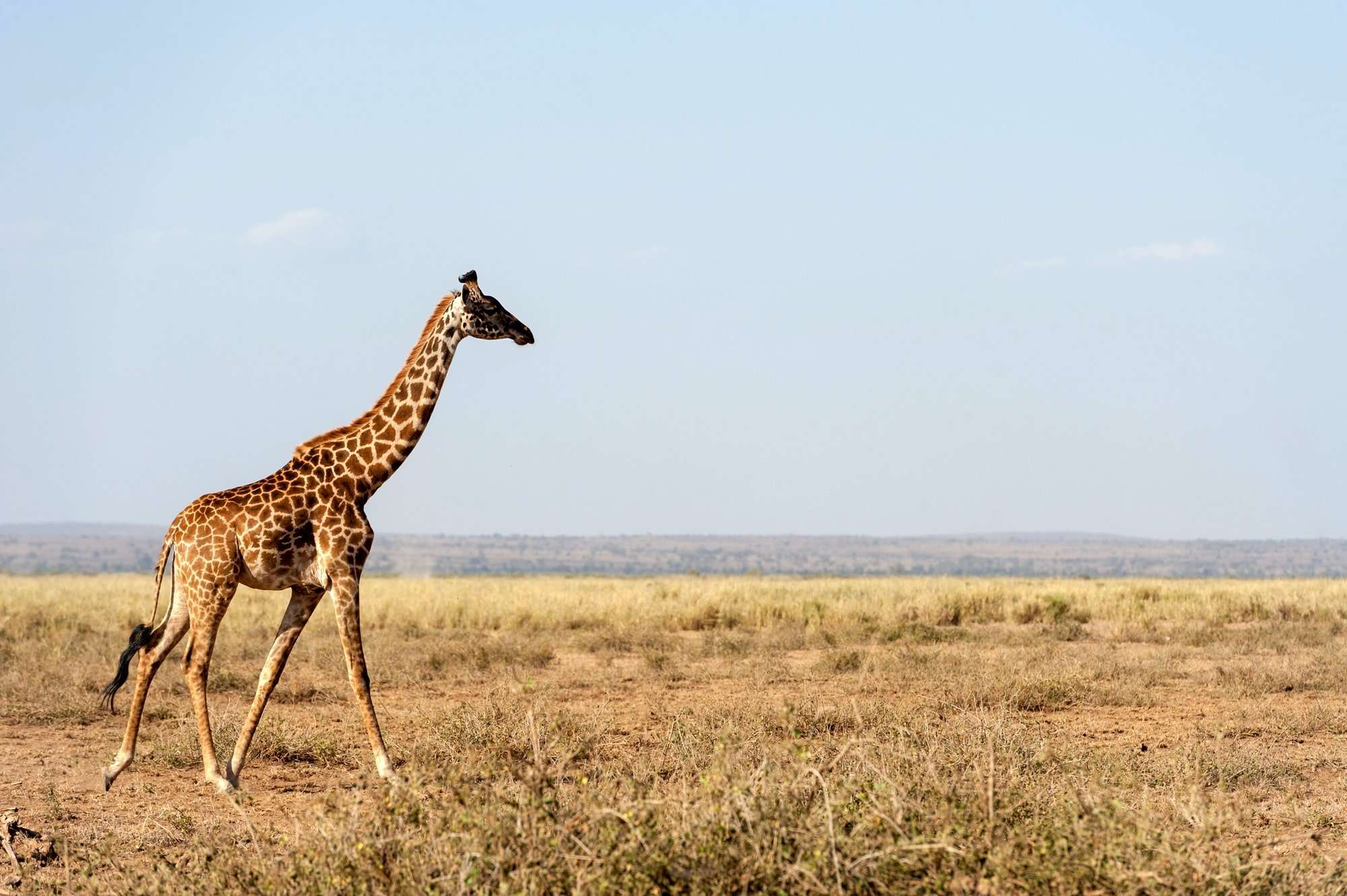
The Masai giraffe is the subspecies found across southern Kenya including the Mara. Around 33,000 Masai giraffes are estimated to live in Kenya. They are the tallest living land animals, with a top running speed of 50 to 60 km/h. They move with a characteristic rocking gait that makes them look slow but covers ground quickly.
Giraffes are consistently visible throughout the Mara on open plains and acacia woodland. They are rarely the focus of a game drive but they are always somewhere in the background.
Hippo
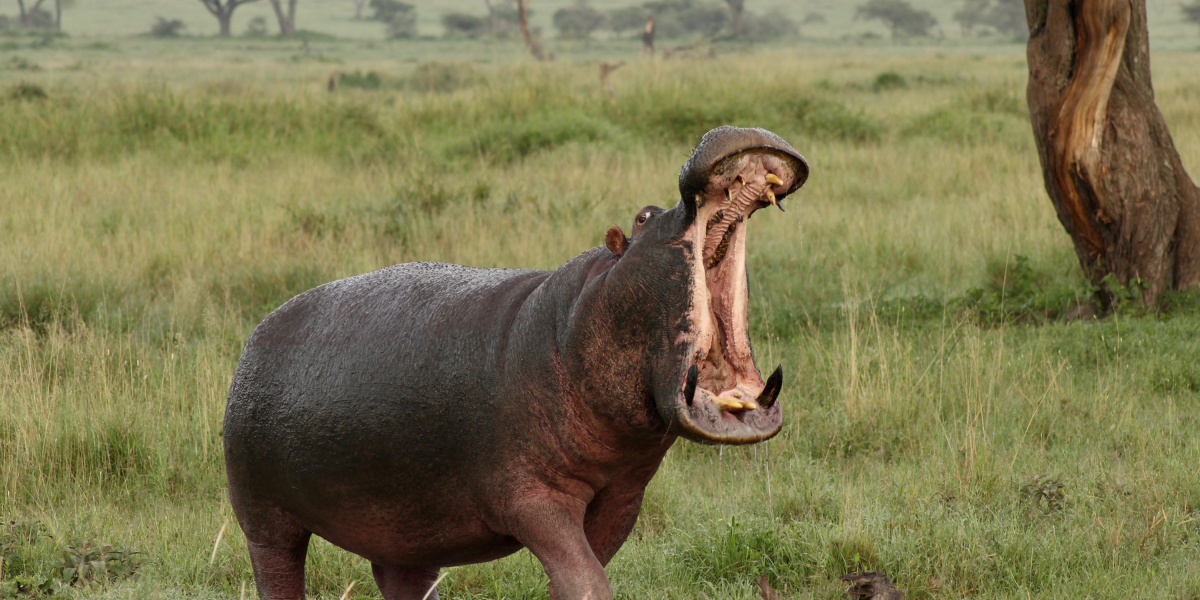
Hippos are the third largest land mammal, with adult males averaging around 1,500 kilograms. They spend most of the day submerged in the Mara River to protect their sensitive skin from the sun. At night they graze on grass, consuming up to 80 pounds per night.
The Mara River holds large hippo pods of 30 to 50 individuals. A boat safari on the river brings you within metres of them. They are not to be underestimated: hippos are responsible for more human deaths in Africa than lions.
Plains Zebra
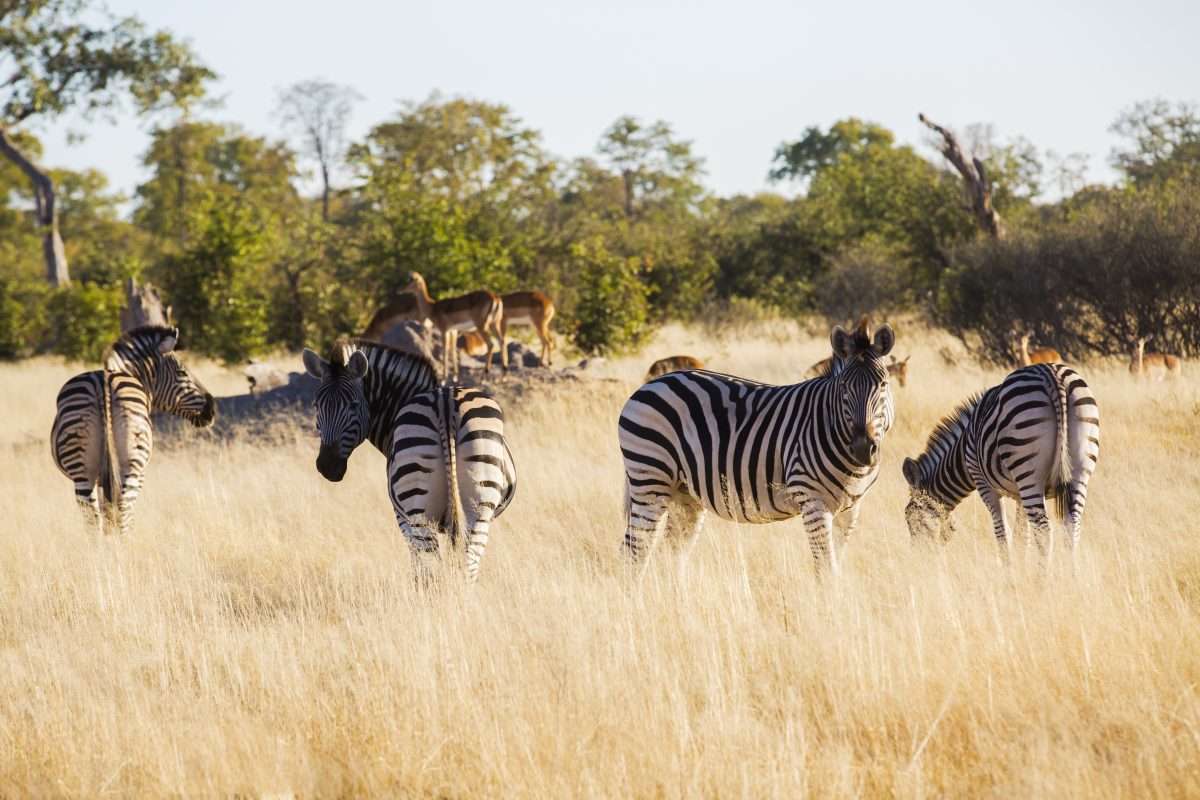
Plains zebras are present in the Mara in enormous numbers year-round. During migration season they move alongside the wildebeest in their hundreds of thousands. The Mara is home to the plains zebra. The rarer Grevy’s zebra with its thinner stripes is found in Samburu Reserve in northern Kenya.
Other Notable Masai Mara Animals
The Mara holds far more than the headline species. These animals are all regularly seen on game drives and add real depth to the wildlife experience.
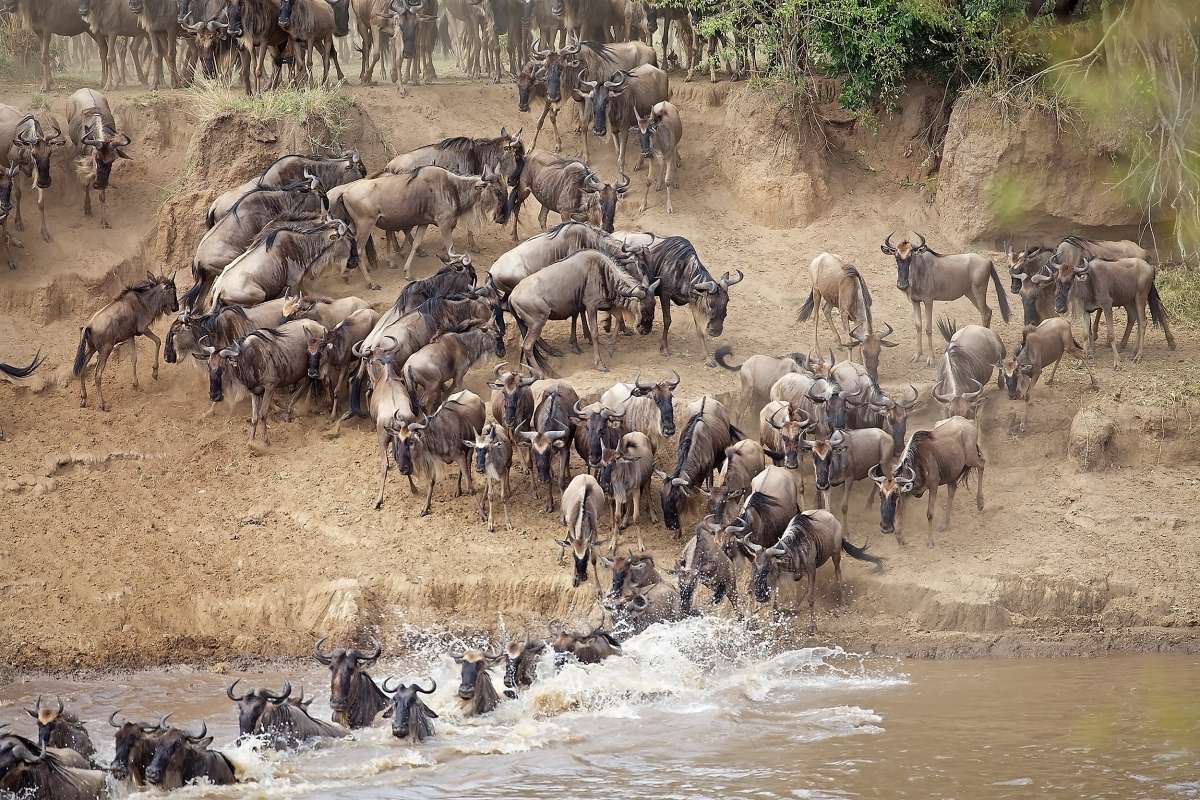
Wildebeest are the engine of the migration. The western white-bearded wildebeest is the subspecies that forms the massive herds of the Serengeti-Mara ecosystem. Outside migration season, resident herds remain in the Mara year-round.
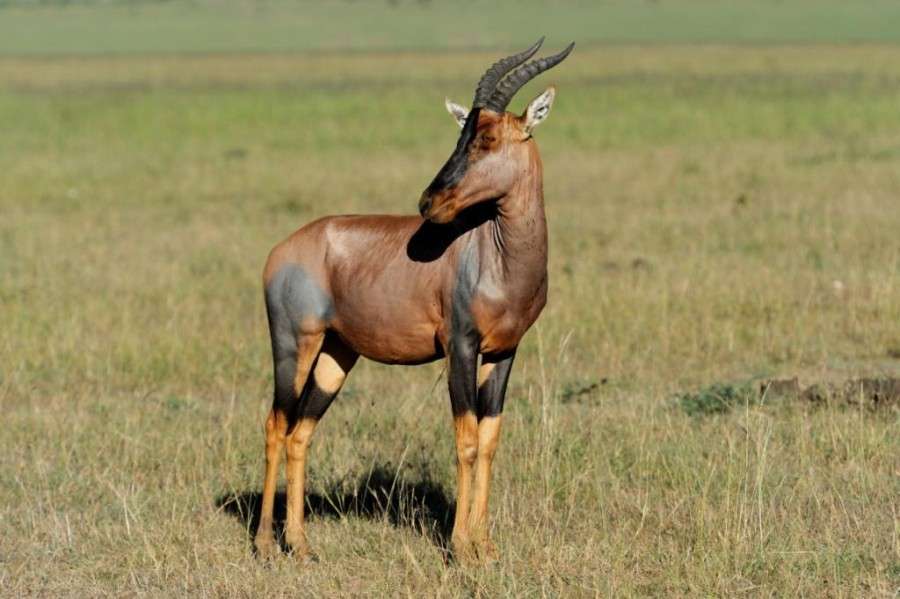
Topi are one of the more visually striking antelopes, with a glossy reddish-brown to purplish-red coat that catches the sunlight. They are found in large numbers in the Mara’s open plains and flood plains. Lions are their main predator.
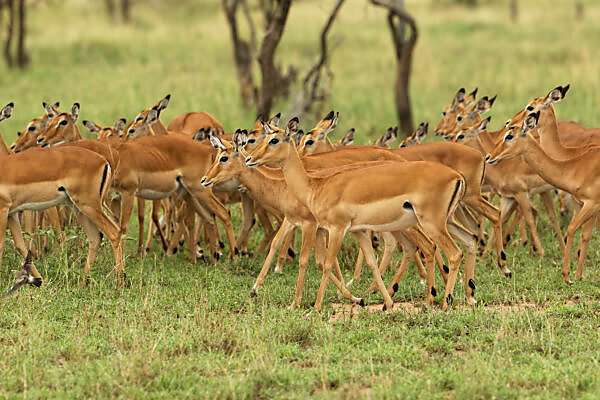
Impala are one of the most commonly seen antelope in the Mara. They graze on grass in the wet season and browse shrubs in the dry season and are found in large mixed herds near water.
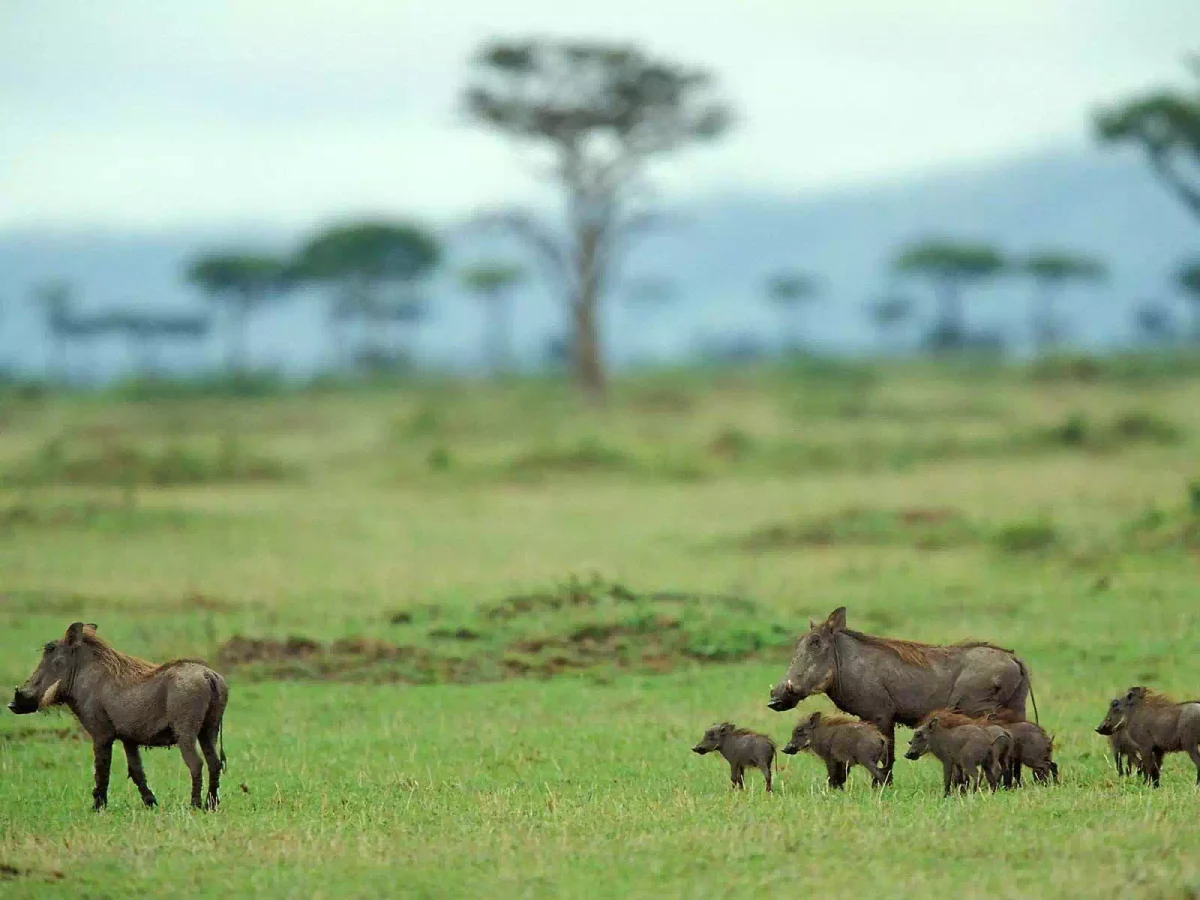
Warthogs are seen throughout the reserve in family groups, running with their thin tails held straight up. They are herbivores and feed primarily on grass and roots during the day.
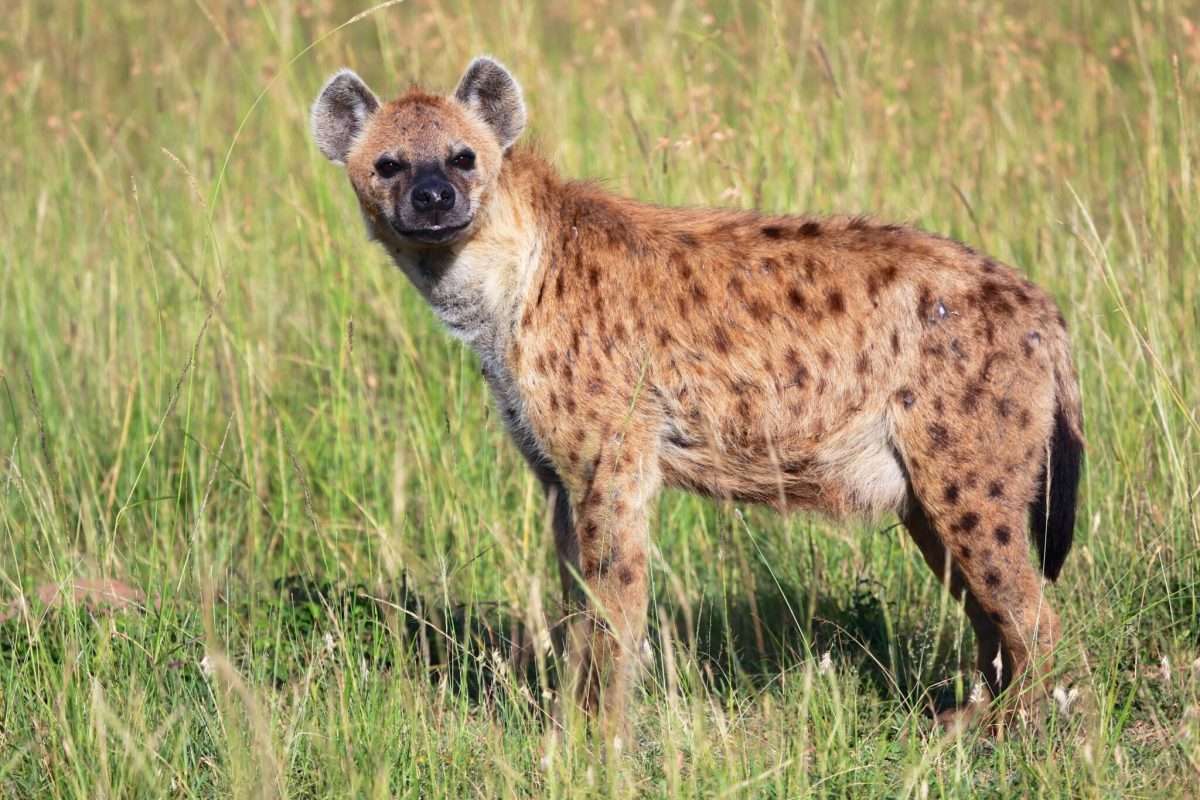
Spotted hyena are more often heard than seen in the Mara. Their long-distance call carries up to 5 kilometres. The Mara holds around 12 hyenas per 100 square kilometres and they are most active in the early morning hours during migration season.
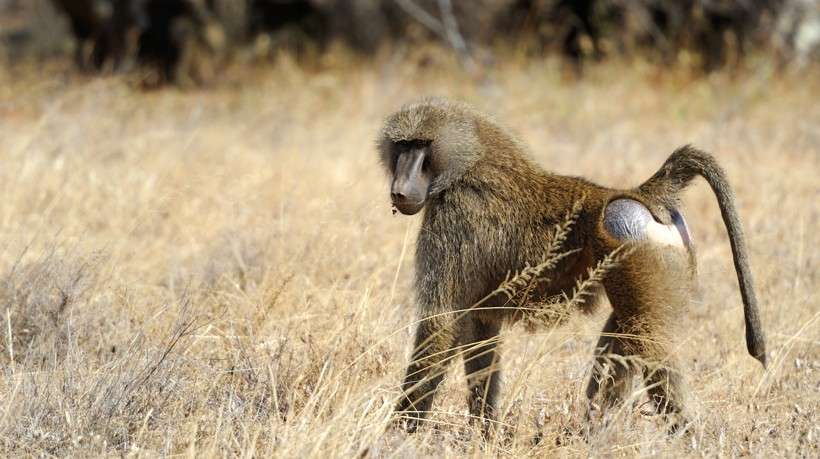
Olive baboons live in troops of 20 to over 100 individuals across the reserve. They are highly adaptable and found in virtually every habitat zone in the Mara.
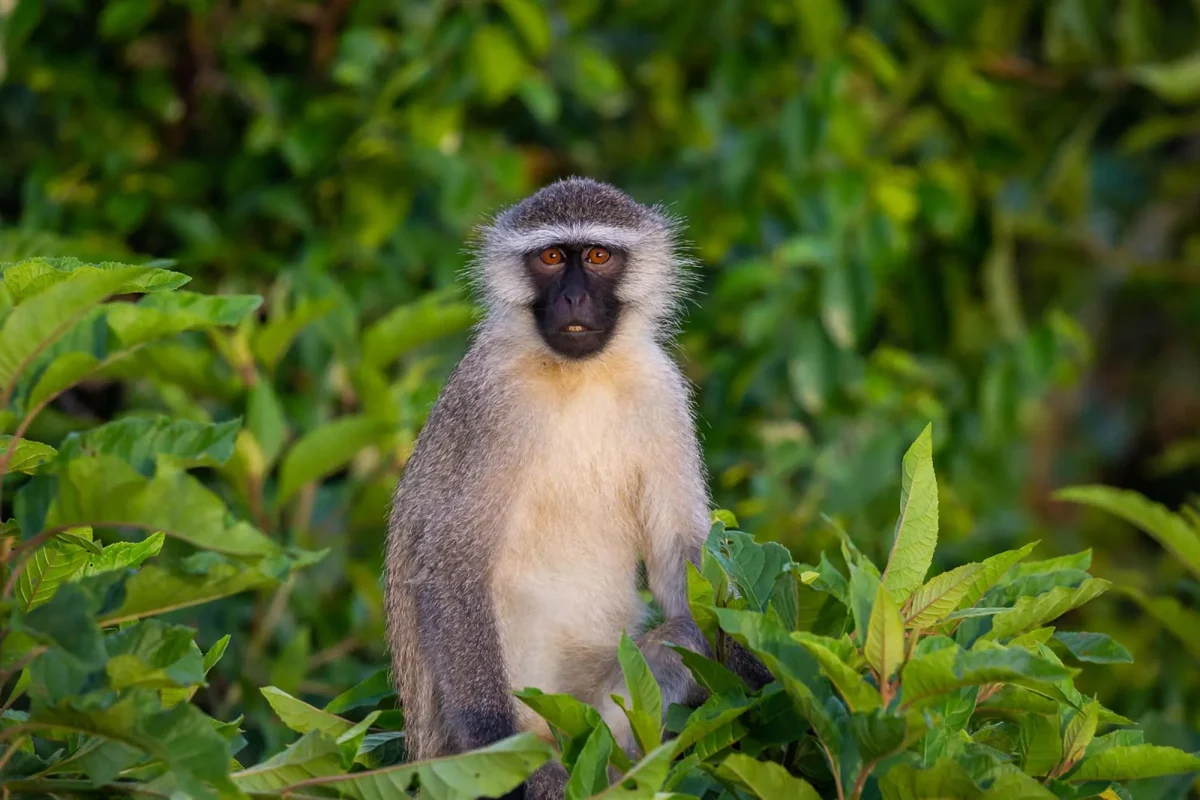
Vervet monkeys inhabit woodland edges and riverine forest in troops of 10 to 50 animals. They eat mainly leaves, shoots, fruit, and insects.
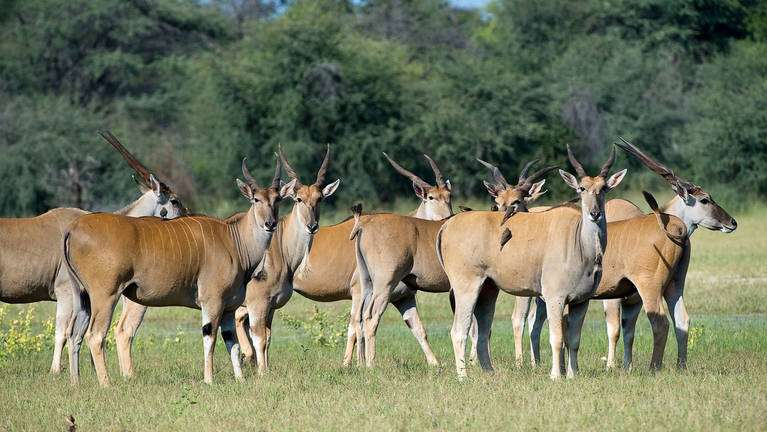
Common eland, the second largest antelope in the world, are found across the Mara’s open savannah. They prefer scrub and avoid thick forest.
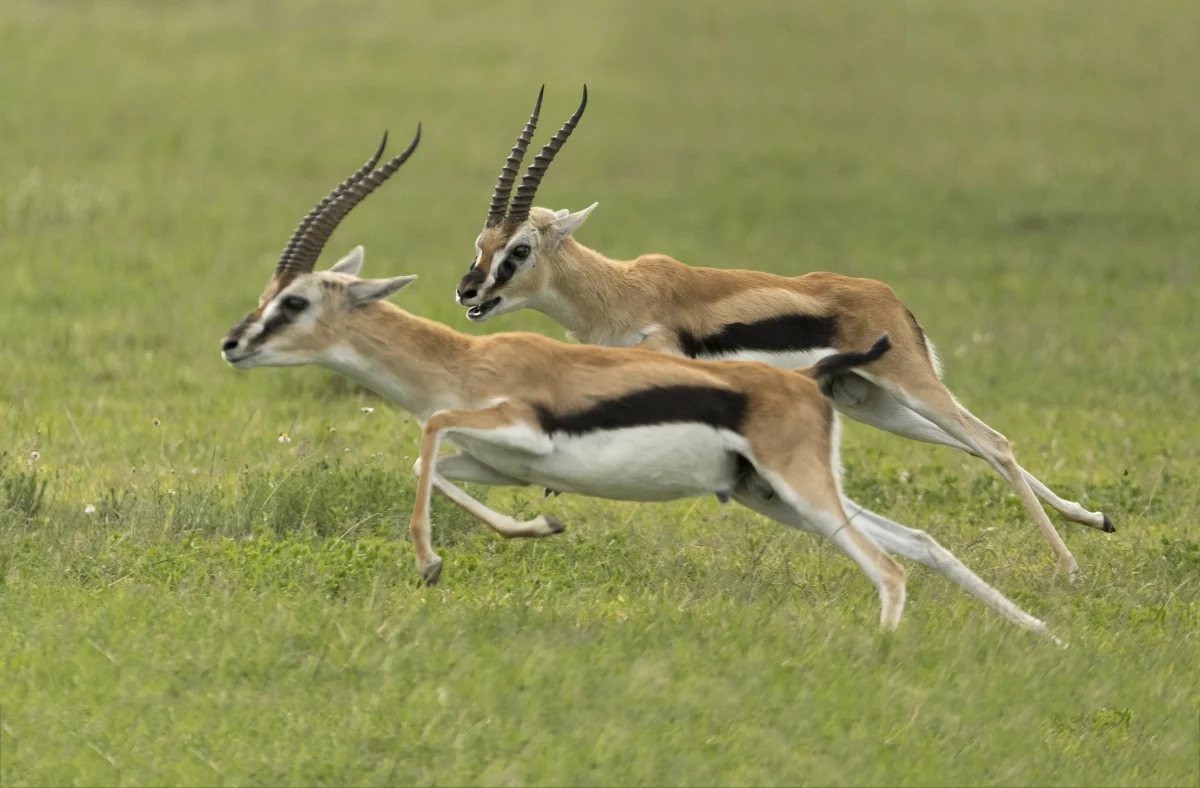
Thomson’s gazelle and Grant’s gazelle are both present in the Mara in large numbers. Thomson’s gazelles are identified by their thick black tail and shorter horns. Grant’s gazelles are larger and often move in mixed groups with wildebeest and zebra.
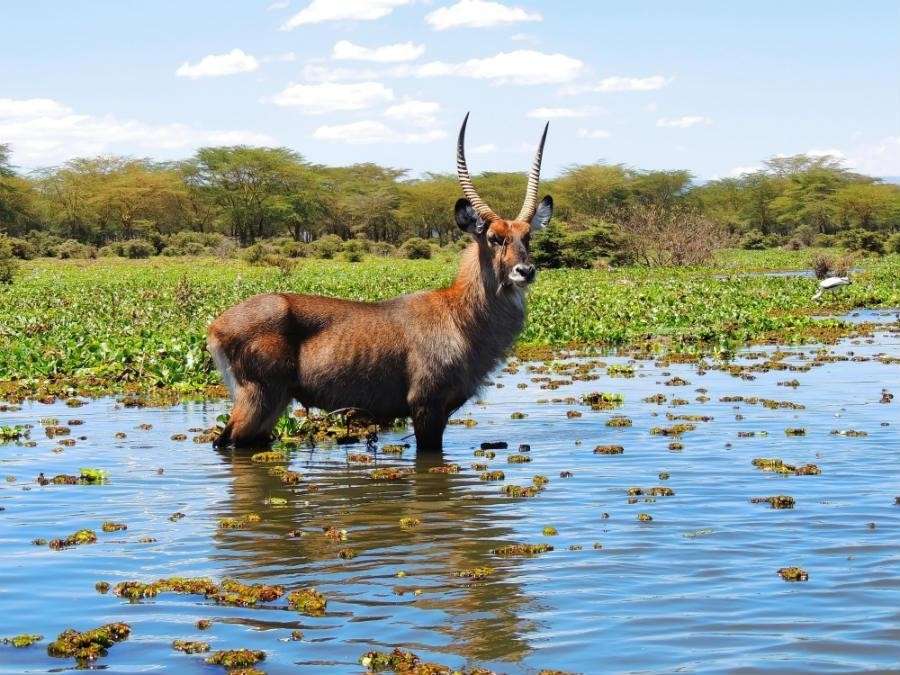
Waterbuck are easily recognized by their shaggy dark brown coat and distinctive white ring on the hindquarters. They are common near the Mara River and other permanent water sources.
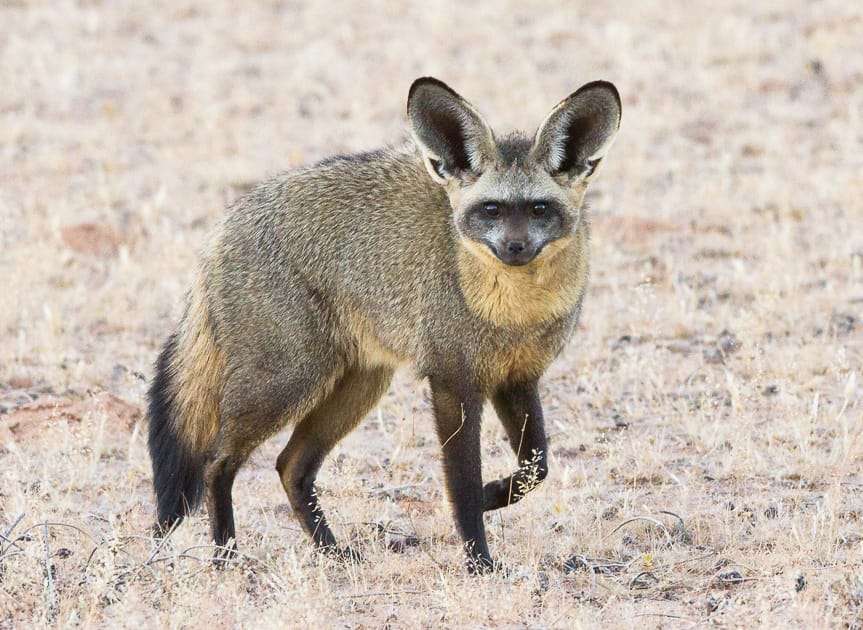
Bat-eared foxes are seen in the open grassland areas, often near heavily grazed sections of the plains. They are highly social and usually seen in pairs or small groups.
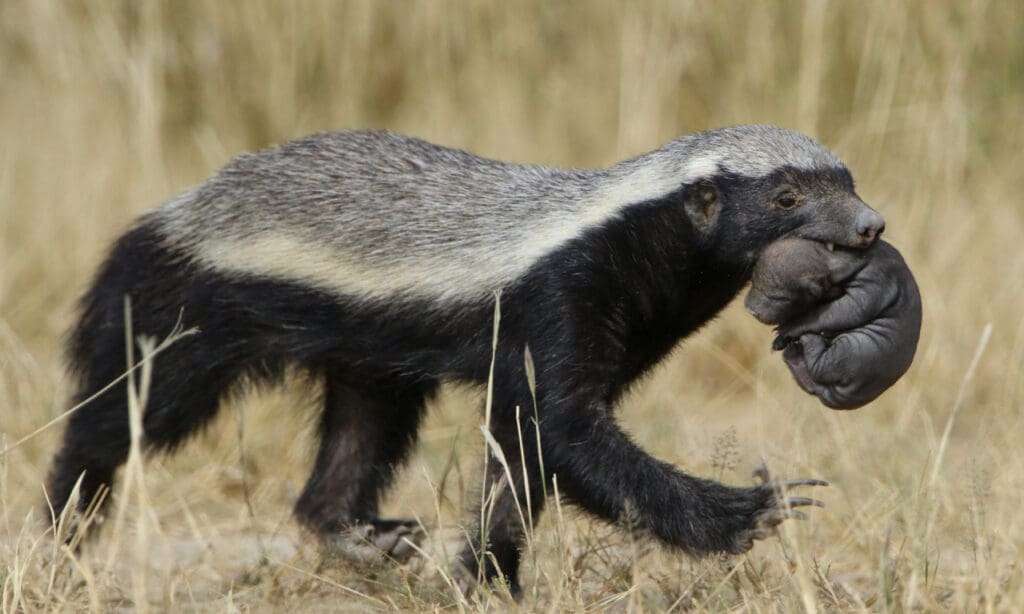
Honey badgers are one of the Mara’s most entertaining nocturnal residents, known for their bold, fearless personality. They are occasionally seen on early morning drives before they retreat for the day.
Masai Mara Birdlife
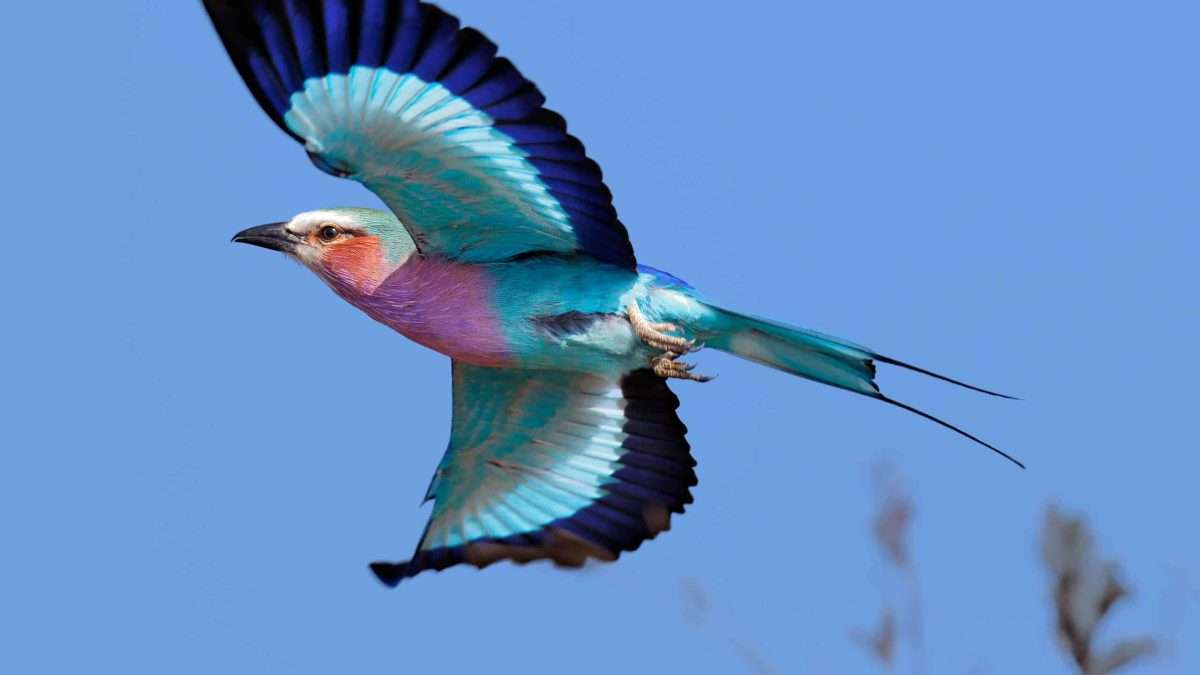
With over 570 bird species, the Masai Mara is one of Kenya’s premier birdwatching destinations. Birdwatching is possible year-round but peaks between November and April when European migratory species arrive.
The Mara holds 57 raptor species, among the highest concentrations of raptors anywhere in Africa. The bateleur eagle, martial eagle, and various hawk species are seen regularly on game drives.
The lilac-breasted roller, Kenya’s national bird, is one of the most photographed birds in the reserve and found perching on termite mounds and low branches across the plains.
Waterbirds along the Mara River include African fish eagles, goliath herons, hamerkops, malachite kingfishers, and yellow-billed storks. The Fischer’s lovebird and Kori bustard are two of the more distinctive species found in the grassland and woodland zones.
Where to See Masai Mara Animals
| Animal | Best Area | Best Time |
|---|---|---|
| Lion | Open plains, lakeshore circuit | Dawn and dusk |
| Elephant | Mara River woodland, open plains | Morning and late afternoon |
| Leopard | Mara River fig trees, rocky outcrops | Early morning, late afternoon |
| Black rhino | Mara Triangle | Any time, guide-dependent |
| Cheetah | Open southern plains | Morning |
| Hippo | Mara River pods | Boat safari, any time |
| Wildebeest | Entire reserve | July to October peak |
| Zebra | Open plains, water sources | Year-round |
| Giraffe | Acacia woodland, open plains | Year-round |
Masai Mara Animals and the Great Migration
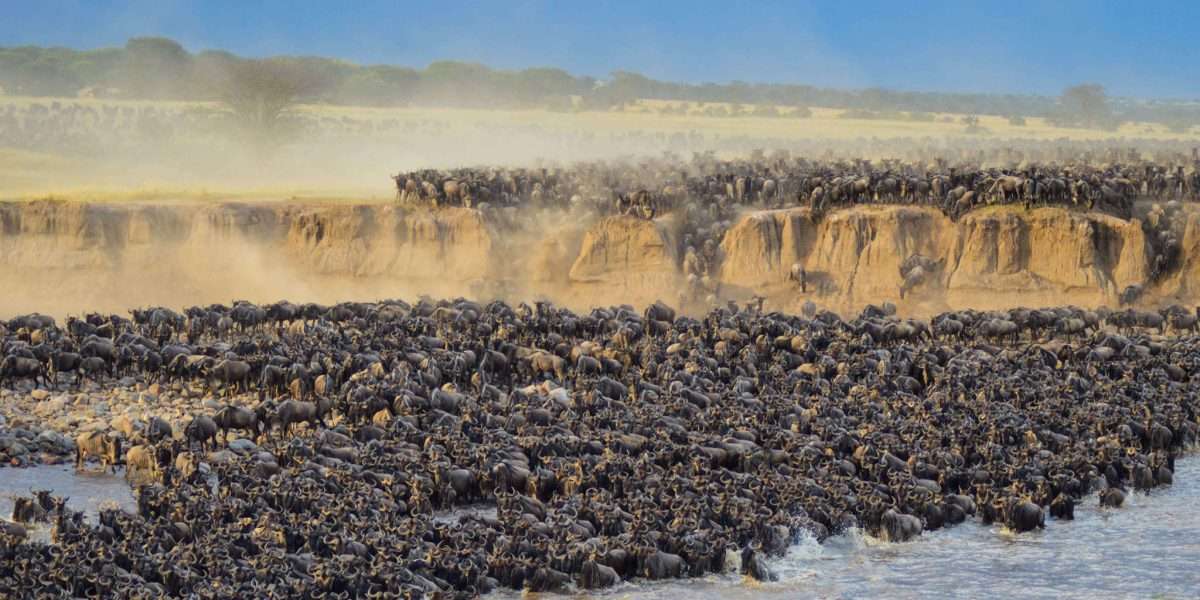
Between July and October, the Masai Mara National Reserve wildlife expands dramatically as 1.5 million wildebeest, hundreds of thousands of zebras, and large numbers of gazelles cross from Tanzania’s Serengeti into Kenya. The Mara River crossings, where herds plunge through crocodile-filled water, are the defining moment of the migration and one of the most dramatic wildlife events on earth.
The arrival of the migration brings every predator in the ecosystem to peak activity. Lions, cheetahs, leopards, hyenas, and wild dogs all follow the herds. Nile crocodiles up to five metres long wait in the river at known crossing points. The entire food chain accelerates.
Outside of migration season, the Mara’s resident wildlife still delivers outstanding game drives. The reserve holds wildlife year-round and no two drives are ever the same.
5 Key Takeaways
- The Masai Mara holds close to 90 mammal species and over 570 birds, with all Big Five and Big Nine species present in the reserve and surrounding conservancies.
- An estimated 850 to 900 lions live in the Mara ecosystem, one of the highest concentrations in Africa, making it one of the most reliable lion-watching destinations in Kenya.
- Cheetahs hunt in daylight on open plains, making the Mara one of the best places in Africa to watch a complete hunt unfold.
- The Great Migration brings 1.5 million wildebeest into the Mara between July and October, triggering peak predator activity across the entire ecosystem.
- Black rhinos are present in the Mara Triangle but sightings are not guaranteed. TourwithPipi’s 8-day fly-in safari includes Ol Pejeta for reliable rhino encounters.
Frequently Asked Questions About Animals in the Masai Mara
1. What animals can you see in the Masai Mara?
The Masai Mara is home to close to 90 mammal species including lions, elephants, leopards, cheetahs, cape buffalo, hippos, giraffes, zebras, wildebeest, and black rhinos. Over 570 bird species are also present.
2. Are all Big Five animals in the Masai Mara?
Yes. Lions, elephants, leopards, cape buffalo, and black rhinos are all present in the Mara ecosystem. Rhinos are found primarily in the Mara Triangle and sightings are less predictable than the other four species.
3. How many lions are in the Masai Mara?
An estimated 850 to 900 lions live across the Masai Mara National Reserve and surrounding conservancies, one of the highest concentrations in Kenya and East Africa.
4. Can you see cheetahs in the Masai Mara?
Yes. Cheetahs are regularly sighted in the Mara, particularly on the open southern plains where they hunt in daylight. The Mara is one of the best places in Africa to watch a cheetah hunt.
5. When is the best time to see wildlife in the Masai Mara?
Wildlife is excellent year-round. The dry season from June to October is the best overall period, combining peak predator activity with the Great Migration. January to March is lion season when thin grass makes big cat sightings more frequent.
6. What is the Great Migration in the Masai Mara?
Between July and October, approximately 1.5 million wildebeest and hundreds of thousands of zebras cross from Tanzania’s Serengeti into the Masai Mara in search of fresh grass. The Mara River crossings are the most dramatic event of the migration.
7. Are there hippos in the Masai Mara?
Yes. The Mara River holds large hippo pods of 30 to 50 individuals. A boat safari on the river is the best way to see them up close alongside Nile crocodiles and waterbirds.
8. Are there rhinos in the Masai Mara?
Yes. Around 35 to 50 black rhinos live in the Mara Triangle on the western side of the reserve. Sightings are possible but not guaranteed. Ol Pejeta Conservancy in central Kenya offers more reliable rhino encounters.
9. What birds can I see in the Masai Mara?
The Mara holds over 570 bird species including 57 raptor species, the bateleur eagle, martial eagle, lilac-breasted roller, African fish eagle, and hundreds of migratory European species arriving between November and April.
10. How many days do I need to see the animals of the Masai Mara?
Three full days gives you a strong overview of the reserve’s wildlife. Four to five days significantly increases your chances of seeing all major predator species and catching a Great Migration crossing during peak season.


