
No. There are no wild tigers in Africa, Kenya, or Tanzania, and there never have been. Tigers are native to Asia, where they evolved roughly 2 million years ago during the Pleistocene epoch. Despite Africa having one of the largest concentrations of large prey animals on earth, no wild African tiger has ever existed, in Kenya, Tanzania, or anywhere else on the continent.
This surprises more people than you would expect. Africa is associated with big cats, and tigers are the world’s largest cat, so the assumption that tigers live in Africa, or specifically in top safari countries like Kenya and Tanzania, is an easy one to make. The answer is still no, and the reasons go deeper than geography.
Quick Answer: Tigers in Africa, Kenya, and Tanzania
- No wild tigers exist in Africa, Kenya, or Tanzania. Tigers are native to Asia, not Africa.
- Tigers evolved in Asia approximately 2 million years ago and never migrated to Africa.
- Africa’s big cat ecosystem, including in Kenya and Tanzania, is already occupied by lions, leopards, and cheetahs, all of which fill the same predator roles a tiger would need.
- Two private reserves in South Africa keep captive tigers for conservation projects, but these are not wild populations and are nowhere near Kenya or Tanzania.
- If you want to see large wild cats on safari, Kenya and Tanzania have lions, leopards, cheetahs, and servals across the Masai Mara, Serengeti, and beyond.
Why Don’t Tigers Live in Africa?
Habitat
Tigers evolved as ambush hunters in dense forests and tall grass across Asia. Their orange and black coat is camouflage built for those environments. In Africa’s open savannah, their stripes would make them visible rather than hidden. Prey would spot them before they could get close enough to strike.
Ecological Competition
Africa’s predator niche is already full. Lions dominate as the apex social predator. Leopards fill the solitary ambush role. Cheetahs cover high-speed pursuit. A tiger moving into that system would compete directly with all of them for the same prey and territory.
Geographic Barriers
Getting from Asia to Africa requires crossing mountain ranges and vast deserts, including the Sahara. Lions and leopards’ ancestors made that crossing before those barriers fully formed. Tigers evolved later and never had the same opportunity or pressure to migrate.
Are There Tigers in Africa in Captivity?
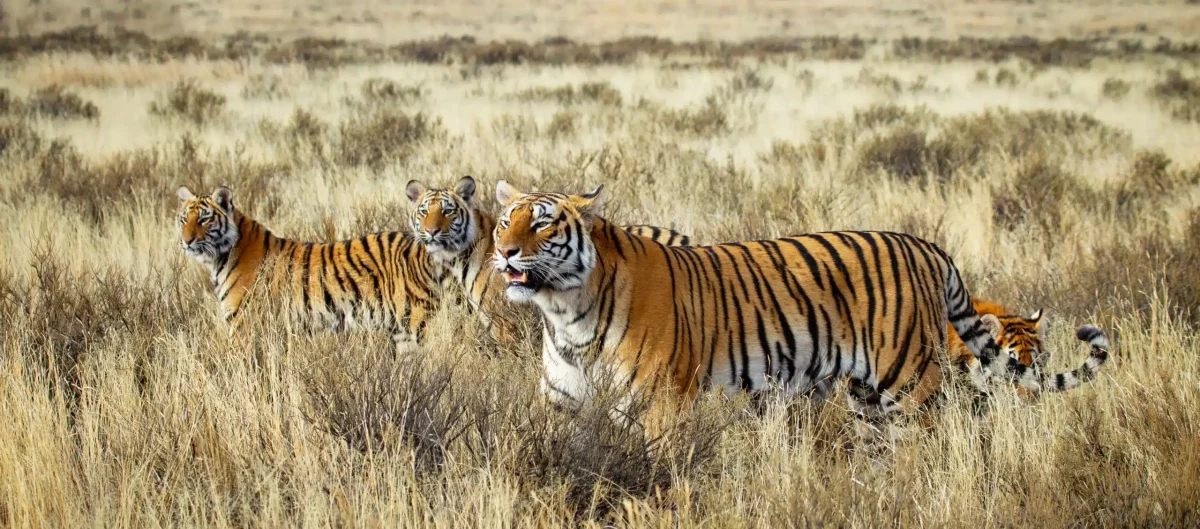
Wild tigers do not live in Africa. Two private projects in South Africa, keep captive tigers:
Tiger Canyon, Karoo. A private reserve in South Africa’s Free State province where rewilded Bengal and white tigers roam a managed, fenced area. Not a wild population, and not part of any safari circuit in East Africa. The project has drawn criticism over the years for its conservation model, since ex-situ tiger rewilding on a different continent isn’t endorsed by major conservation bodies as a genuine species-recovery strategy.
Laohu Valley Reserve (Save China’s Tigers). Captive-born South China tiger cubs were brought to South Africa in 2003 to be rewilded before an eventual return to China. That return has never happened, several tigers have died over the years, and the project has drawn significant criticism for its outcomes.
Africa’s Native Big Cats
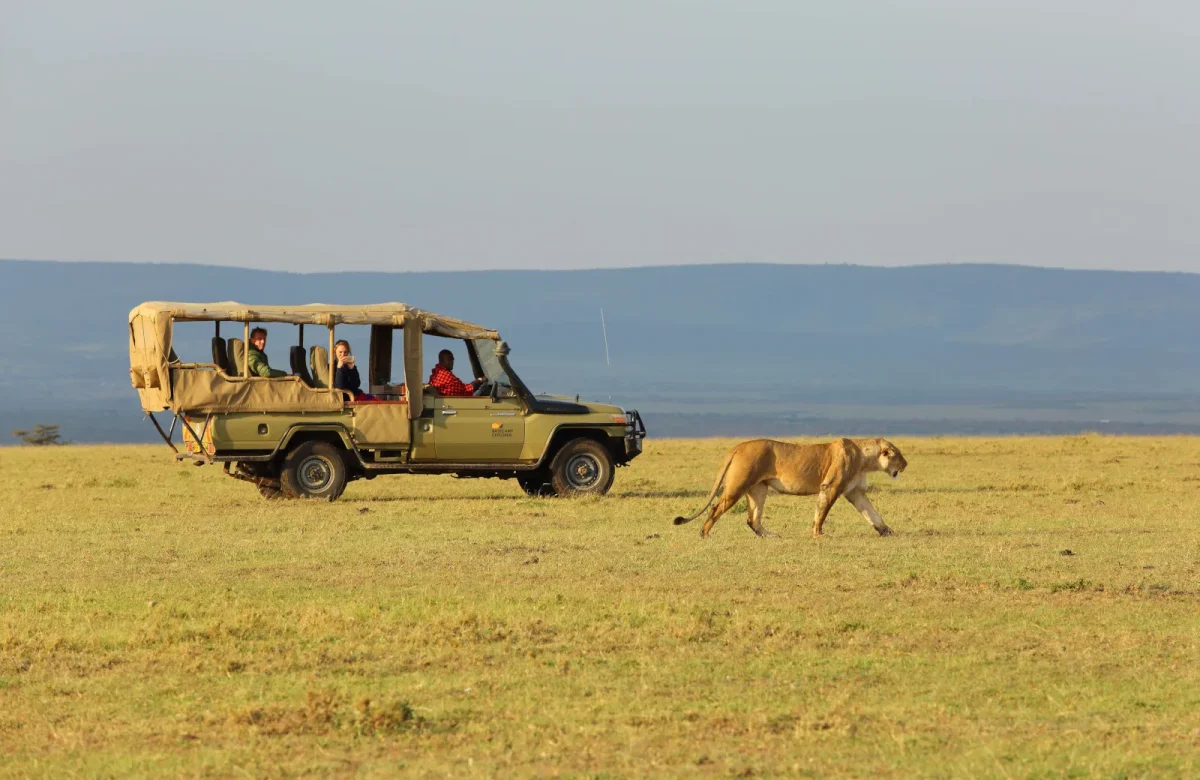
African Lion — largest predator in Africa, hunts in prides across open savannah. The Masai Mara and Serengeti have the highest lion densities on earth.
Leopard — the closest behavioral equivalent to a tiger in Africa. Solitary, nocturnal, hunts by ambush. Harder to find than lions but consistently present in Kenya and Tanzania.
Cheetah — built for speed, not stealth. Hunts in daylight across open ground. Excellent sightings in the Masai Mara and Serengeti’s Ndutu Plains.
Serval — smaller spotted wild cat, visible at dusk near water across East Africa.
Can Tigers Survive in Africa?
In managed reserves, yes tiger can survive, as demonstrated in South Africa. In the wild, almost certainly not. Africa’s prey animals evolved to evade lions and leopards, not tigers. The habitat does not match a tiger’s hunting requirements, and established lion prides would resist any territorial competition. Introducing tigers to wild Africa would also create serious conservation complications for native species.
Where to See Wild Cats on Safari in Africa
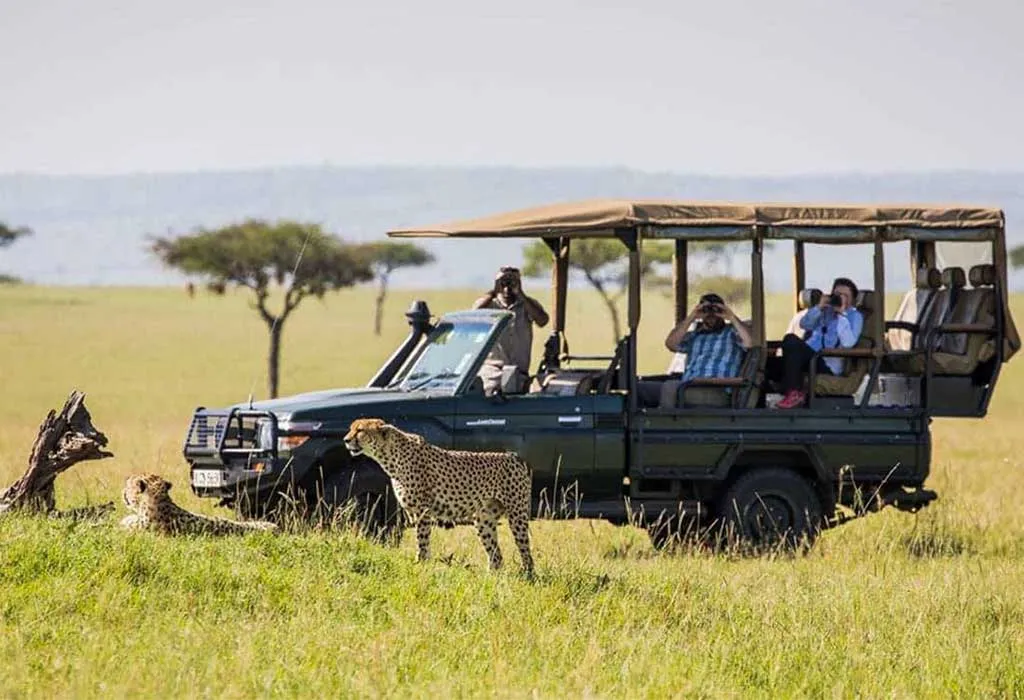
Masai Mara, Kenya — highest lion density in Africa, excellent cheetah and leopard sightings year-round.
Serengeti, Tanzania — over 3,000 lions across the ecosystem. Leopards along the Seronera River. Cheetahs on the open plains.
Ngorongoro Crater, Tanzania — contained geography concentrates predators. Consistent lion and leopard sightings.
Timing matters for predator sightings, since lions, leopards, and cheetahs hunt around prey movement. In Kenya, the Great Migration runs roughly July to October, when predator activity peaks around the Mara River. In Tanzania, the equivalent window runs June to October, as herds move through the Serengeti and predators follow.
TourwithPipi runs private Kenya and Tanzania safaris where big cat encounters, real ones, are a consistent part of every game drive. See Kenya packages or Tanzania packages.
Where Do Tigers Actually Live?
Tigers live in just 13 countries today, all in Asia, occupying a fraction of their historical range. Here is where the world’s remaining wild tigers are found, based on the most recent national surveys:
| Country | Estimated Wild Tigers | Subspecies |
|---|---|---|
| India | ~3,682 | Bengal |
| Russia | ~750 | Amur (Siberian) |
| Indonesia | ~400 | Sumatran |
| Thailand | ~180–220 | Indochinese |
| Bangladesh | ~100 | Bengal |
| Nepal | ~355 | Bengal |
| Bhutan | ~130 | Bengal |
| Malaysia | under 150 | Malayan |
| China | ~70 | Amur (border population) |
| Myanmar | fewer than 50 | Indochinese |
India alone holds close to three-quarters of the world’s wild tigers. Cambodia, Laos, and Vietnam once had wild tiger populations but have lost them entirely over the past two decades, with no confirmed breeding populations remaining.
Why Do People Think Tigers Live in Africa?
A few things drive this mix-up, and none of them are really about geography.
Big cat confusion. Lions, leopards, cheetahs, and tigers all get grouped together in casual conversation as “big cats,” and Africa is the continent most associated with that group. Once tigers get mentally filed under “African wildlife,” the geography stops mattering.
Pop culture blends the two continents. Tony the Tiger has sold breakfast cereal since the 1950s standing next to jungle imagery that reads as vaguely African. Exxon ran its “Put a Tiger in Your Tank” campaign for decades using the same generic wild-continent branding. Survivor’s “Eye of the Tiger” and a hundred safari-themed logos use tiger stripes as shorthand for “wild Africa” even though the animal has never set foot there. None of this is intentional misinformation. It is decades of marketing treating “tiger” and “African safari” as the same aesthetic.
Safari marketing itself. Africa is the default answer to “where do I go to see wild predators,” so any predator, tigers included, gets mentally assigned there by association.
Language habits. English pairs “lions and tigers” together so often, from idioms to movie titles, that the two animals get treated as a geographic package deal even though they have never shared a continent.
Key Takeaways
- No tigers live in Africa, Kenya, or Tanzania, wild or historically. Tigers are native to Asia.
- Three reasons explain it: habitat mismatch, full ecological competition, and geographic barriers.
- About 5,600 wild tigers remain today, across 13 countries in Asia, led by India with close to three-quarters of the global total.
- Two private South African reserves hold captive tigers but these are not wild populations, and neither is anywhere near an East Africa safari route.
- Africa’s real big cats are lion, leopard, cheetah, and serval, all consistently visible on safari in Kenya and Tanzania.
Frequently Asked Questions
Are there tigers in Africa?
No. There are no wild tigers in Africa. Tigers are native to Asia. Two private reserves in South Africa keep captive tigers but these are not wild populations.
Are there tigers in Tanzania?
No. Tanzania has never had wild tigers. Its parks and reserves, including the Serengeti and Ngorongoro Crater, are home to lions, leopards, and cheetahs instead, with some of the highest lion densities in Africa.
Is a tiger found in Kenya?
No. Kenya has never had a wild tiger population. The Masai Mara has the highest lion density in Africa, along with consistent cheetah and leopard sightings, but no tigers.
Can you find tigers in Africa?
Not in the wild. The only tigers in Africa live in two managed private reserves in South Africa, far from any East Africa safari route, and both hold captive-born, not wild, populations.
Are tigers from Africa?
No. Tigers evolved in Asia approximately 2 million years ago and never lived on the African continent.
Were there ever tigers in Africa?
No. There is no fossil record or historical evidence of tigers in Africa.
Can tigers live in Africa?
In managed private reserves, yes. In the wild, almost certainly not. The habitat, prey adaptation, and competition from established predators make wild survival highly unlikely.
Where do tigers actually live?
Tigers live in the wild in 13 countries today, all in Asia: India, Russia, Indonesia, Thailand, Bangladesh, Nepal, Bhutan, Malaysia, China, and Myanmar, plus small, functionally extinct populations tracked in a few others. India holds close to three-quarters of the global wild tiger population.
Why do people think tigers live in Africa?
Mostly because of big cat confusion, decades of pop culture using tiger imagery for generic “wild Africa” branding, and Africa’s reputation as the default safari continent for any large predator. Geography rarely enters into it.
What big cats live in Africa?
Lion, leopard, cheetah, serval, and caracal. There are no tigers, jaguars, or cougars native to Africa.
What is the African tiger?
There is no such species. The term is sometimes used loosely to describe Africa’s apex predators, particularly the lion. No tiger species, living or extinct, was native to Africa.
Where can I see big cats on safari in Africa?
The Masai Mara in Kenya and the Serengeti in Tanzania are the best locations for lion and cheetah sightings. The Seronera River area in the central Serengeti is excellent for leopards. Ngorongoro Crater concentrates predators in a way that makes sightings more predictable.
Are tigers endangered?
Yes. Around 5,600 wild tigers remain across 13 countries in Asia, per the most recent national surveys. Three subspecies, Bali, Javan, and Caspian, went extinct in the 20th century. The main threats today are habitat loss and poaching.
Contact the team on WhatsApp to plan a private Kenya or Tanzania safari where the big cats you see are real, wild, and native to the continent.


